Mobile Security Trailer Rentals
Deployed Same Week.
Self-contained surveillance trailers with 4K PTZ cameras and live monitoring for construction sites, events, parking lots, and remote properties. Solar or on-site power. No permits. No contractors. Coverage exactly where you need it.
Full-Service Rental
We handle everything.
You focus on your project.
No installation crew to manage. No IT setup. No permits to pull. We deliver, power up, monitor, and retrieve — from first call to last trailer out.
Cameras live within 48 hours
Book & Site Consult
Tell us your location, coverage dates, and site layout. We'll recommend trailer count and positioning for maximum coverage — no guessing, no wasted equipment.
We Deliver & Power Up
Our team delivers the trailer, positions it on-site, connects solar or on-site power, and links to our monitoring network. Setup takes under 2 hours — no electrician, no permits.
Live Monitoring + Retrieval
Our operators watch your site 24/7 for the rental period. When your project wraps, we schedule retrieval — zero cleanup on your end.
Everything in one rental
Solar or On-Site Power
Flexible power options: built-in solar panels with battery backup, or connect to available on-site power. Works in remote fields, active construction lots, or any outdoor venue.
4K PTZ Cameras
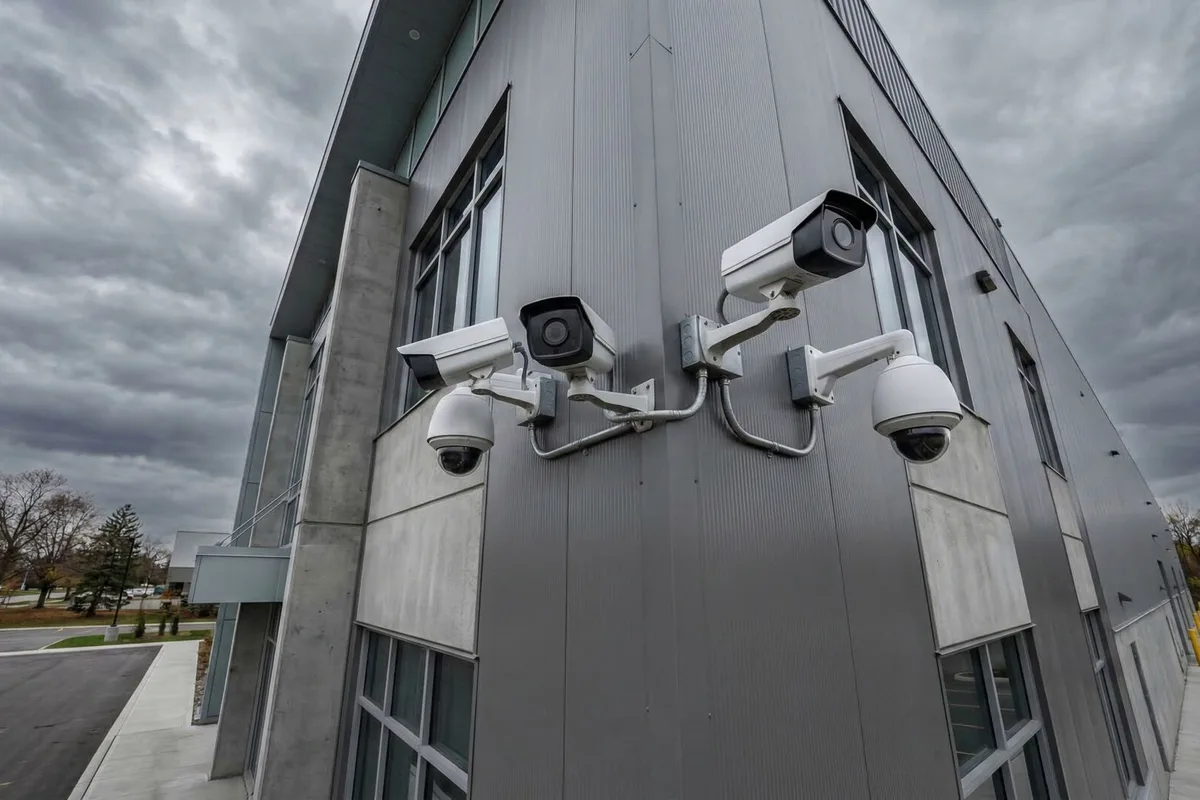
Pan-tilt-zoom cameras cover large areas from a single trailer. Our operators can redirect cameras remotely in real time to track activity across your site.
24/7 Live Monitoring
Riowell operators watch your site around the clock. They can dispatch security or contact emergency services on your behalf — not just send you an alert.
4G/LTE Connectivity
Cellular uplink means no on-site internet or IT setup required. Works equally well on a remote construction lot or a packed event venue.
Two-Way Audio Deterrent
Built-in speaker and microphone let operators issue live verbal warnings to trespassers, reducing incidents before police involvement is needed.
Rapid Deployment
Trailers arrive ready to run. Setup takes under 2 hours. No trenching, no permits, no contractor coordination — just position under sun or plug in and go.
Three situations put a trailer on a site. Yours is likely one of them.
Nobody rents a surveillance trailer because they like trailers. It's because the site isn't ready for a permanent system, or it won't be there long enough to justify one, or something already happened and waiting six weeks for an install isn't an option.
The construction PM on a site with nothing on it yet
- What brought you here
- Excavation starts in two weeks. There's no permanent power, no finished hoarding, no conduit in the ground, and the first equipment drop is already scheduled. Anything you mount today gets moved or demolished before the building tops out.
- What you're actually worried about
- Losing copper, fuel, tools, or a compactor in the first month — and having nothing to hand the insurer or the police beyond a rough time window.
A trailer doesn't care that the site has no power and no walls. It arrives self-contained, and it moves when your site plan moves. We set it against the phase you're in now and reposition it when the ground changes, rather than asking you to design a permanent system around a site that doesn't exist yet.
The yard or lot operator with a seasonal exposure
- What brought you here
- You've taken on overflow trailers for the season, opened a temporary storage compound, or you're holding stock outdoors for a few months in a corner of the property your fixed cameras were never aimed at.
- What you're actually worried about
- That the exposure is real but temporary, so cabling a permanent run out to it is hard to justify — and doing nothing feels like a decision you'll regret in March.
Coverage for the months you actually need it, on the part of the yard that's actually exposed. When the season ends we retrieve the unit and you're not left with a mount and a dead cable run on a fence nobody uses.
The operator who just got hit
- What brought you here
- Two overnight incidents in a week, or one bad one — a fence cut, a trailer opened, catalytic converters gone. Staff don't want to open up alone and you need something visible on the ground now, not after a design-and-install cycle.
- What you're actually worried about
- That it happens again tomorrow night, while you're still working out what the permanent fix should look like.
This is the fastest thing we can put on a property. A trailer with lighting, cameras and operators watching it changes the site tonight, and it buys you the weeks you need to design the permanent system properly instead of panic-buying one.
What a trailer deployment looks like from your side of it
It's a rental, so most of the work is ours. But there are a handful of decisions only you can make, and making them early is the difference between a trailer that's live this week and one that isn't.
Booking call and coverage consult
We take your location, your start and end dates, what's on the site, and what has already gone wrong. We tell you how many units the site realistically needs and what a single unit will and won't see.
Commit to a start date and a rough end date, and be honest about which one is soft. Tell us what you want watched — the gate, the laydown area, the fuel tank — because a trailer covers a zone, not a whole property, and we'd rather aim it at the right zone than the middle.
Placement assessment
We look at where a unit can physically stand, what the cameras would see from there, southern exposure and shading if it's running on solar, cellular signal strength at that spot, and how a truck gets in and out. We confirm site placement and any municipal or site-plan conditions that apply at your location before we schedule delivery.
Get us the site plan or a few photos, and confirm who controls the ground we'd park on — that's you if you own it, and your landlord, the general contractor, or the property manager if you don't. If placement needs someone else's sign-off, you're the one who can get it.
Delivery, power-up, and setup
We tow the unit in, position and level it, raise the mast, connect solar or tie into the on-site power you've provided, confirm the cellular uplink, then aim and focus every camera against the actual site rather than the plan.
Have the placement spot clear and reachable by a truck, and have someone on site with authority to say 'not there, there.' If we're plugging into site power, that outlet needs to exist and be live on the day.
Monitoring configuration and the watch
We set the hours and rules our operators watch to, define what counts as an event on your site, and run it. Operators can issue a live audio warning, call your escalation contact, or contact emergency services.
Give us an escalation list with real phone numbers and the hours each person is reachable, and tell us your legitimate after-hours traffic — the cleaner, the fuel truck, the owner who comes back for a laptop. Without that, your first week is mostly operators phoning you about your own people.
Extension or relocation
We extend the term, or move the unit to a new position or a new site as your work sequence shifts. A relocation is a short visit: reposition, re-aim, re-verify signal.
Tell us before your end date rather than on it, and tell us early if the site sequence is about to make the current position useless. Availability of a specific unit isn't guaranteed indefinitely, especially in summer.
Retrieval
We collect the unit and confirm what footage you want retained and for how long. Nothing is left behind — no mounts, no conduit, no decommissioning work for you.
Give us access on the retrieval date and flag any incident you may still need footage from before the unit leaves, so we hold it rather than cycle it.
Have this ready and the job goes faster
- Exact site address with gate or access details, plus who holds the keys or the code
- Confirmed start date and honest end date — and which of the two is likely to move
- A site plan or a handful of photos showing where a unit could reasonably stand
- Landlord, general contractor, or property manager approval if you don't control the ground
- Your on-site power situation: a live outlet, a generator, or nothing at all
- An escalation list — names, numbers, and the hours each person actually answers
- Your normal after-hours traffic so operators know who belongs on site at 3am
Why two sites need very different setups
Scope and availability are set long before anything else is. These are the factors that decide how many units your site needs, how fast we can get them there, and what configuration goes on the trailer.
Term length
A three-week deployment and an eleven-month one are configured differently. Longer terms mean planning for a full seasonal swing — winter daylight, snow clearing around the unit, and at least one repositioning as the site changes. Short terms are about getting live fast and getting back out cleanly.
Power on site
A live outlet or a site generator is the strongest input into what a unit can run and for how long. Solar alone works well through the long-daylight half of the year; a shaded, north-facing, or December-heavy deployment is where we specify on-site power or a generator instead. This is the single most important thing to settle before delivery.
What the site actually needs watched
One trailer covers a zone well. A long, narrow yard, a site with two gates, or a property with a laydown area and a compound at opposite ends needs more than one unit or it needs a frank conversation about which area goes unwatched. We'd rather have that conversation at the consult than after an incident.
Distance and access
Everything we deploy goes out of our Mississauga yard. Distance shapes delivery scheduling and how quickly we can get back out for a relocation or a service call. Access matters too — a site a tow vehicle can't turn around in narrows where the unit can stand.
Number of units and how they're sequenced
Multiple units on one site get positioned as a set, with overlapping views rather than duplicated ones. On a phased construction site, we plan the sequence of positions against your schedule up front so each move is a short visit rather than a redesign.
Monitoring hours
Overnight and weekend-only coverage suits a site that's busy and staffed during the day. Round-the-clock suits vacant property and anything holding high-value stock. Your incident pattern usually points at the right answer — if everything happens between 1am and 4am, say so.
Availability is the constraint people underestimate, particularly through construction season — the sooner you name your dates, the more likely the unit and the position you want are actually free. If your site is going to be there for years and already has power and a fence, we'll tell you a permanent install is the better fit and design you one instead.
Answered before you have to ask
“Does solar actually work through an Ontario winter?”
Not on its own everywhere, and we won't pretend otherwise. Mid-December gives us roughly nine hours of daylight in Southern Ontario, much of it low, grey, and at an angle — and panels under snow produce nothing until somebody clears them. On an open, south-facing site with someone brushing the panels off, solar carries a unit through winter fine. On a shaded site, between buildings, or where nobody is going to touch the panels, it won't, and the honest answer is on-site power or a generator. We assess this at the placement stage, per site, and tell you which one you're in before delivery rather than after your first outage.
“Our site keeps changing. What happens when the trailer is in the way?”
We move it. That's the main reason to rent one instead of installing fixed cameras. Tell us when the sequence is about to change and we schedule a relocation — reposition, re-aim, re-verify signal, usually a short visit. On phased construction we'd rather plan the whole sequence of positions at the start, so each move is routine instead of an emergency.
“Do we have to babysit it? Fuel it? Assign someone to it?”
No. There's nothing for your staff to operate day to day, and a solar unit needs no fuel. The two real exceptions in winter: if snow is burying the panels, somebody on site brushing them off keeps the unit healthy, and if we've put you on a generator, that generator needs fuel like any other generator on your site. We monitor unit health remotely and we'll call you if something needs a hand rather than waiting for you to notice.
“What if the power dies or the cellular signal drops?”
Battery carries the unit through normal overnight and cloudy stretches; the cameras keep recording locally when the cellular link drops, so footage isn't lost with the connection. What is genuinely interrupted is live monitoring — an operator cannot watch a feed that isn't arriving. We see the unit go quiet on our side and we treat that as an event: we work the connection, and if it isn't coming back we get someone to the site. We check signal strength at the exact placement spot before delivery precisely to make this rare.
“What if it gets damaged or hit by a piece of equipment on our site?”
The unit stays our equipment for the whole rental, and normal wear, weather, and the occasional attempt to interfere with it are ours to deal with — it's GPS-tracked and built to be difficult to tamper with. What sits with you is the ordinary site stuff any contractor's equipment is subject to: a machine backing into it, a trailer clipping it, a load dropped on it. We agree the placement with you partly to keep the unit out of swing paths and traffic lanes, and the rental paperwork spells out where the line falls before you sign it rather than afterwards.
“Should I just put up fixed cameras instead?”
If your site is permanent, has power and a fence, and you'll be there for years — yes, almost certainly. A fixed system will cover more of it, see it better, and over a multi-year horizon it's the sounder purchase, and we'll say that on the first call rather than rent you something. A trailer earns its place when the site is temporary, when it has no power or no fence yet, when the exposure is seasonal, or when you need coverage this week and can't wait for a design-and-install cycle. Plenty of our construction customers use both: a trailer through excavation and structure, a fixed system once there's a building to mount it on.
Coverage for any temporary site
If you need surveillance for weeks or months — not years — a rental trailer is the fastest, simplest solution. No installation. No decommissioning. Just coverage on your timeline.
“We needed coverage for a 14-week condo excavation in Mississauga. Riowell had a trailer on-site within two days — it was up before our hoarding fence was even finished. Equipment theft dropped to zero for the entire project.”
Need coverage this week?
We'll have a trailer on-site.
Tell us your site, dates, and coverage needs. We'll have a trailer on-site within 48 hours of confirmation.
Mobile security trailers in your city
Deployment time depends on distance from our Mississauga yard, and placement depends on your municipality's site rules. Pick your city for local deployment detail.
Built for properties like yours
Frequently Asked Questions
Ready to secure
your business?
Book a free on-site assessment. We'll evaluate your property and design a custom security and IT solution — no pressure, no commitment.