Every aisle covered.
Every door controlled.
4K cameras, card access control, and live monitoring for warehouses and distribution centres across Ontario. Reduce shrinkage, prevent break-ins, protect inventory — and meet insurance and compliance requirements with a single system.
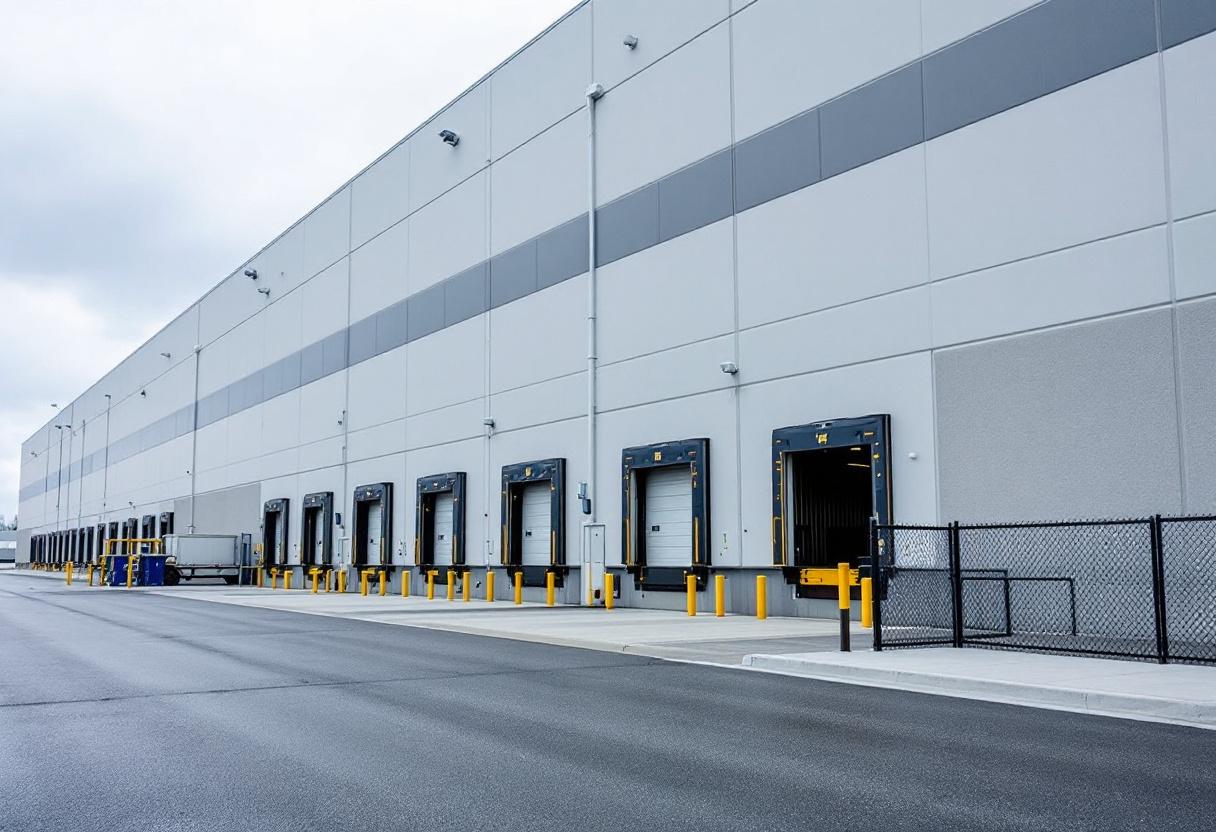
The building is fine. The count is not.
Warehouse security is an awkward purchase because there is rarely a break-in to point at. There is a variance, a shortage claim, a dock door that was up for forty minutes, and three people who each have a reasonable explanation. The people below are all looking at the same building and worrying about completely different things in it.
Usually read by: Operations director / warehouse manager / loss prevention
The operations director
- Your day
- You are looking at throughput, labour hours, dock scheduling and the cycle-count report. Security shows up on your desk only as a line item someone wants approved, or as a customer asking why their pallet count was short.
- What you're judged on
- Signing off on a number you cannot defend. Writing a variance off as shrink for a second year running is a decision, and eventually somebody asks you what you did about it.
The warehouse manager
- Your day
- You are on the floor. Roll-up doors, trailer swaps, a receiving lead who is on the far side of the building, temps from the agency who started this morning, and a returns lane that quietly became a staging area for anything nobody knows what to do with.
- What you're judged on
- Being asked who was on that door at 2:40 PM and having only a shift schedule to answer with. You know your people. You just cannot prove anything about them either way.
Loss prevention or inventory control
- Your day
- You are reconciling scans against physical counts, chasing shortage claims from customers, and trying to build a picture from records that were never designed to tell you where product went — only that it left.
- What you're judged on
- Producing a case that stands up. An accusation you cannot support is worse than the loss, and pulling footage that turns out to be the wrong angle, the wrong timestamp, or already overwritten is the specific failure you are hired to avoid.
The alarm goes off at 1 AM. Then what?
On most warehouses the panel calls a list, the list starts with the warehouse manager, and after that there is nobody. Nine times out of ten it is a dock door contact bumped by a trailer that settled, so the tenth time gets treated the same way — acknowledged and dismissed from a phone in the dark. Nobody is going to drive in at 1 AM for a contact that has cried wolf all year. With a camera on the zone the panel is calling about, someone looks before the decision is made, and the call you get is either "nothing there, go back to sleep" or a description of what is actually happening at door 14. The bigger change is daytime: the same system means the 2:40 PM question gets answered from footage instead of from memory.
Same protocol whether the site is in Mississauga or anywhere else we cover.
The things people in your position actually ask us
“Putting cameras over my staff is going to poison the floor.”
It does when it is framed as watching people, and it does not when it is framed as covering doors and exits. In practice the positions that matter are dock doors at door level, returns and damaged-goods staging, the baler and compactor pad, and the high-value cage — places product leaves, not places people work. We would rather cover six honest exits well than blanket the pick faces, and telling your floor exactly what is covered and why is part of the install, not an afterthought.
“We already pay an alarm company. Isn't this the same money twice?”
Different jobs. The alarm tells you a contact opened after hours. It cannot tell you whether that was a break-in or a driver who came back for a forgotten phone, which is why the calls stop being acted on. If your alarm is sound and your real problem is an unexplained variance at count, the cameras are doing daytime work and the alarm keeps doing nights — that is a smaller purchase than replacing both, and we will scope it that way.
“Half the building is racking. Cameras won't see past the first aisle.”
Correct, and pretending otherwise is how warehouse quotes get padded. Racking makes aisle-by-aisle coverage expensive and mostly useless. The design that works treats the building as a set of exits rather than a floor plan: every dock door, every man door, the cage, the returns lane and the compactor pad. Product that leaves the building passes one of those, whatever route it took through the racks.
“We run three shifts with agency temps. Nobody is going to administer badges.”
That is the honest failure mode of most access control in a warehouse — cards get issued, never collected, and within a year the list means nothing. If you have no one who will own the list, do not buy the doors. Put the money into camera coverage on the same doors, which needs no administration, and revisit access control on the cage and the office corridor only, where the list is short enough that one person can actually keep it accurate.
“We lease this building and may not be here in two years.”
Then the design question is what stays and what comes with you. Cameras, recorders and switches move; conduit, core drilling and cable in the deck do not, and landlord consent for those takes longer than the install itself. We will build a system weighted toward the portable side and tell you plainly which positions are worth cabling permanently for the remaining term and which are not.
“How do I show a shortage claim wasn't us?”
With door-level coverage on the dock, the outbound load is on video as it is built and as it leaves — pallet count visible, timestamped, matched against the bill of lading. The value shows up in the conversation, not the courtroom: most shortage disputes are settled by one party being able to produce the loading footage in an afternoon while the other is still checking paperwork.
The loss isn't at the fence. It's at the dock door.
Warehouse loss rarely looks like a break-in. It looks like a dock door that was open for a legitimate reason, a trailer backed in during a shift change, and a forty-minute window when the receiving lead was on the other side of the building. Nothing was forced. Nothing tripped an alarm. The count is short at the next cycle count and there is no way to work backwards to a person or a timestamp.
The other reliable gap is anywhere product legitimately leaves the floor without a pick ticket — returns staging, damaged-goods holding, the compactor and bale area. Those zones exist in every operation and almost never get camera coverage, because they were never thought of as exits.
In Mississauga, warehouse and distribution operations face rising internal and external theft risk across the Peel Region logistics corridor. Our systems give Mississauga warehouse operators complete visibility and access control — from a single dashboard.
Case Study — Third-party logistics warehouse, Peel Region
A 3PL operator had been carrying a persistent unexplained variance on small, high-turn SKUs and had written it off as shrink for two years. Cameras covered the perimeter and the main office corridor — not the returns bay or the cardboard baler. We added dock-door coverage at door level, a camera on the returns staging lane, one on the bale and compactor pad, and moved the high-value cage onto card access with its own audit trail. Within the first full cycle count after go-live the variance on those SKUs closed, and it stayed closed. No confrontation was ever needed — the client's view is that the accountability itself did the work.
Exposed Zones in a Working Warehouse
Warehouse Security in Mississauga — what we actually see.
Mississauga holds the highest concentration of warehousing and distribution space in Canada, most of it within a 15-km band of Pearson International Airport. The Dixie/Britannia corridor, Heartland Town Centre, Meadowvale Business Park, and the Airport Corporate Centre contain everything from bonded pharmaceutical DCs to e-commerce fulfilment centres to food-grade cold-chain operations. Peel Regional Police commercial crime data shows repeated targeting of warehouses along Creekbank Road, Matheson Boulevard, and Derry Road — primarily after-hours break-ins through dock doors or side entrances that have cameras but no controlled access. Inside shrinkage is the second major problem: high-throughput fulfilment operations in Mississauga see persistent contractor and employee theft that typically isn't caught until an inventory discrepancy is traced back weeks later. Riowell is based in Mississauga — our techs are inside the 403/410 ring and can be on-site for the initial walk-through within 24 hours.
Pearson-corridor bonded and high-value DCs
Air-cargo feeder and bonded pharmaceutical warehouses in the Airport Corporate Centre and Dixie/Britannia belt require camera and access documentation that satisfies CBSA and health-regulatory audit standards — not just commercial security requirements. We've designed systems for this specific compliance environment.
High-throughput shrinkage exposure
Mississauga e-commerce fulfilment centres process millions of units per week — which means a 0.1% inside-theft rate translates into significant annual dollar losses. Card access by zone, aisle cameras with scheduled monitoring, and access-log review close the accountability gap.
Home-base response speed
Our operations centre and installation crew are based in Mississauga. Walk-through within 24 hours of inquiry, installation typically within two weeks, same-day live monitoring on existing IP camera infrastructure if needed.
Police Coordination — Mississauga
Peel Regional Police 11 Division (Mississauga South) and 12 Division (Mississauga North) handle warehouse incidents across the city's two major industrial belts. We pre-register each facility's address, dock access protocols, and emergency contacts with the correct division before monitoring goes live.
Client Story — Mississauga
E-commerce fulfilment centre, Heartland corridor — 12 months under monitoring
80,000 sq ft fulfilment operation on Matheson Boulevard. Prior-year inside shrinkage estimated at $210,000 — primarily contractor theft during inbound receiving shifts. We installed 28 cameras across all receiving, picking, and packing zones plus card access on receiving docks and the high-value cage. Live monitoring on receiving shifts and overnight. In 12 months: shrinkage reduced to approximately $14,000 (93% reduction). Three unauthorized access events flagged during monitored shifts — two contractor dismissals and one policy-change action. The facility's insurance carrier reduced premiums at renewal citing the documented loss reduction.

Warehouse Protection
34% of shrinkage is internal.
Cameras change behaviour.
Visible, high-resolution cameras and controlled doors create accountability. Employees and contractors behave differently when every movement is recorded. Most operations see measurable shrinkage reduction within 90 days.
Fully secured in under two weeks
Warehouse Walk-Through
We map your entire facility — loading docks, receiving areas, inventory aisles, high-value cages, offices, and parking lots. We identify blind spots your current setup misses.
System Design & Installation
We install 4K cameras at every critical point, card access readers on every controlled door, and alarm sensors where needed. Full wiring, NVR setup, and remote access configured.
Monitoring & Ongoing Support
View live feeds from any device. After-hours monitoring detects break-ins and unauthorized access. Monthly system health checks. Expand coverage anytime as your operation grows.
Everything your warehouse needs in one system
4K Interior & Exterior Cameras
Wide-angle cameras for aisles and docks, PTZ for parking lots. IR night vision for low-light areas. Read pallet labels, licence plates, and employee badges from any angle.
Loading Dock Monitoring
Dedicated cameras on every dock door capture every shipment in and out. Match inbound/outbound footage to BOLs and manifests. Resolve shortage claims in minutes.
Card Access on Every Door
Control who enters your warehouse, high-value cages, offices, and server rooms. Schedule access by shift. Revoke instantly when staff leave. Full audit trail for compliance.
Shrinkage Reduction
Internal theft accounts for 34% of warehouse losses. Visible cameras and access logs create accountability. Most operations see measurable shrinkage reduction within 90 days.
Remote Viewing & Alerts
View any camera from your phone, tablet, or desktop — anywhere. Get instant push notifications for motion events, forced doors, or after-hours activity. Review footage in seconds.
Scalable Multi-Site
Manage multiple warehouses from one dashboard. Add cameras and doors as you expand. Standard platform means any Riowell location gets the same software, same login, same support.
Client Results
What warehouse security clients say
“We had inventory shrinkage we couldn't account for — over $60K in a year. Riowell covered every aisle end and the loading dock with cameras, and installed card access at the stockroom. Within 60 days, the issue was identified and resolved. Shrink dropped 70% in the next quarter.”
“A forklift operator made a false damage claim against us — claimed the product arrived that way. Our new Riowell dock cameras had footage of the undamaged pallet being loaded. Claim denied, $18,000 saved.”
“We had a fire safety inspection flag a blind spot near our dock doors. Riowell solved it and added mezzanine coverage at the same time. Now I can pull up any camera from my phone at a client meeting. That visibility alone changed how I manage the team.”
“Riowell installed 28 cameras and card access across our 60,000 sq ft warehouse in Mississauga. Within three months, our inventory shrinkage dropped by 40%. The dock cameras alone resolved two shipping disputes that would have cost us $15K each.”
Stop the shrinkage.
See everything that moves.
Book a free walk-through of your warehouse. We'll identify blind spots, design a camera and access system that covers every aisle, dock, and door — and show you the ROI from reduced theft alone.
Security for Warehouses beyond Mississauga
We cover Mississauga and 14 other Southern Ontario communities. Every location gets the same technicians, the same equipment, and the same response commitment — pick yours below.
Related properties we protect
Frequently Asked Questions
Ready to secure
your business?
Book a free on-site assessment. We'll evaluate your property and design a custom security and IT solution — no pressure, no commitment.