Guard every container.
Every night.
Shipping yards hold millions in cargo that sits exposed overnight. Our live-monitored camera systems watch your containers, trailers, and perimeter 24/7 — detecting intrusions and calling police on a verified breach rather than an unconfirmed alarm.
The box left the yard. The question is which one, and with whom.
Container yards do not usually lose freight dramatically. They lose it administratively — a box released against paperwork that read correctly, a seal nobody photographed, a chassis that sat for eleven days and then did not. Three different people find out about it in three different ways.
Usually read by: Yard manager / logistics director / terminal operator
The yard manager
- Your day
- You run the stack. Hostler moves, row assignments, empties going out and loads coming in, a chassis pool that never balances, and a back row that nobody walks between counts because it takes twenty minutes on foot.
- What you're judged on
- A box that is not where the system says it is. Finding it is usually the easy part; the hard part is the hour you spend not knowing whether it was mis-stacked or it is gone.
The logistics director
- Your day
- You are between the carriers and the customers. Interchange disputes, short-load claims, a shipper asking for the yard's security profile before renewing, and the recurring argument about whose custody the freight was in when it went wrong.
- What you're judged on
- Absorbing claims you cannot attribute. Every one you settle without evidence teaches the next carrier that this yard is where damage and shortages go to be forgiven.
The terminal or gate operator
- Your day
- You are in the lane. Checking paperwork against a container number, writing the interchange, reading a plate, and doing it under queue pressure with a driver who has been waiting and a dispatcher calling you about the next one.
- What you're judged on
- Releasing the wrong box. One transposed digit on a busy afternoon becomes someone else's missing load, and your initials are on the interchange.
A yard at 3 AM has nobody in it on purpose.
That is the whole design of a drop lot — the gate is locked, the hostlers are gone, and the only thing moving is supposed to be nothing. So when something does move, the honest sequence at most yards is: an alarm or a neighbour calls the number on the sign, the yard manager answers, and there is no way to tell from a phone whether it is an after-hours carrier who was given the code six months ago or someone with a torch at the rail-side fence. Then it waits until morning. With eyes on the gate lanes and the back rows, the distinction is made in real time — an authorized pull is logged and left alone, and anything else gets a warning through the yard speakers with police called on a breach somebody has actually seen.
Same protocol whether the site is in London or anywhere else we cover.
The things people in your position actually ask us
“Our gate is moving trucks sixteen hours a day. A camera won't read box numbers in that.”
Not a general-purpose camera, no. Reading a container number and a plate in the same pass is a dedicated position with the right lens, mounting height and lighting for the lane geometry, and it either works or it does not — there is no partial credit. We will show you sample captures from your own lane during the survey before you buy anything, so you are not taking the claim on trust.
“Carriers pull after hours with their own gate code. That's how the yard works.”
Then the goal is not to stop after-hours pulls, it is to make them attributable. A code shared across a carrier's dispatch office tells you a company entered, not a person or a truck. Pairing the gate event with a plate and container capture means the after-hours pull stays convenient and the interchange record becomes specific enough to settle a dispute months later.
“We don't own the boxes. A loss is the carrier's problem, not ours.”
Contractually, often true. Commercially, it is your problem the moment a carrier decides your lot is where their freight goes missing. The reason to document departures is not liability — it is keeping the accounts. If your interchange discipline is already tight and carriers are not pulling volume, you do not need us for this reason; the argument for coverage on a yard like that is the equipment sitting in it, not the boxes passing through.
“The rows change every day. Whatever you cover today is the wrong row tomorrow.”
Which is why yards get covered by geometry, not by inventory. Fence lines, gate lanes, the approaches between stacks, and the fixed positions where a box has to pass to leave. Rows rotating underneath that does not change the coverage. Where a specific high-value stack needs attention for a season, a repositionable unit handles it without redesigning the system.
“We lease the land and can't put poles or trenching in.”
Common on rail-adjacent and port-adjacent lots, and it is worth raising before design rather than after. Building-mounted positions, existing light standards, and cellular units on ballasted bases cover most of what a pole would, and we will confirm what your lease and the landowner actually permit in writing before anything gets built — not discover it when a crew shows up with an auger.
“We already pay for a guard in the gate house.”
A good gate guard is better at paperwork judgement than any camera, and we are not going to tell you to replace one. What a guard cannot do is see the back rows, the empty stack and the rail-side fence at the same time as checking a driver in. If you have a guard, the right spend is usually everything except the gate — and we would rather quote you that than duplicate the person you already have.
Most of it leaves through the front gate.
The picture people carry of yard loss is a cut fence at 2 AM. The more common version is a tractor in the gate lane with paperwork that reads correctly, a container number transposed by one digit, and a driver who was genuinely on the list — for a different pickup. If the gate camera cannot resolve a container number and a plate in the same pass, the yard has no way to tell those two events apart until a receiver calls about a load that never arrived.
Seals are the second blind spot. A door opened and re-closed in a back row is discovered days later and hundreds of kilometres away, and by then the question is not who took it but where the chain of custody broke. A yard that can show a timestamped image of an intact seal at the moment the box left the gate ends that dispute on the first call.
In London, shipping and container yards face increasing cargo theft pressure across the Southwestern Ontario freight corridor. Our live operators are watching London yards overnight — before a breach reaches your containers.
Case Study — Intermodal drop lot, Highway 401 corridor
An operator running a drop lot for several carriers was absorbing recurring short-load claims and could not attribute any of them. The existing cameras covered the office and the gate approach at a wide angle — readable enough to see a truck, not to read a box. We placed plate and container-number capture in both gate lanes, covered the back rows and the empty stack, and put a camera on the seal-check position so every departure produced a legible seal image. Attribution changed immediately: the claims that followed were resolved against footage rather than negotiated, and the recurring pattern stopped once carriers understood every box was being read at both ends.
Exposed Zones in a Container Yard
Shipping Yard Security in London — what we actually see.
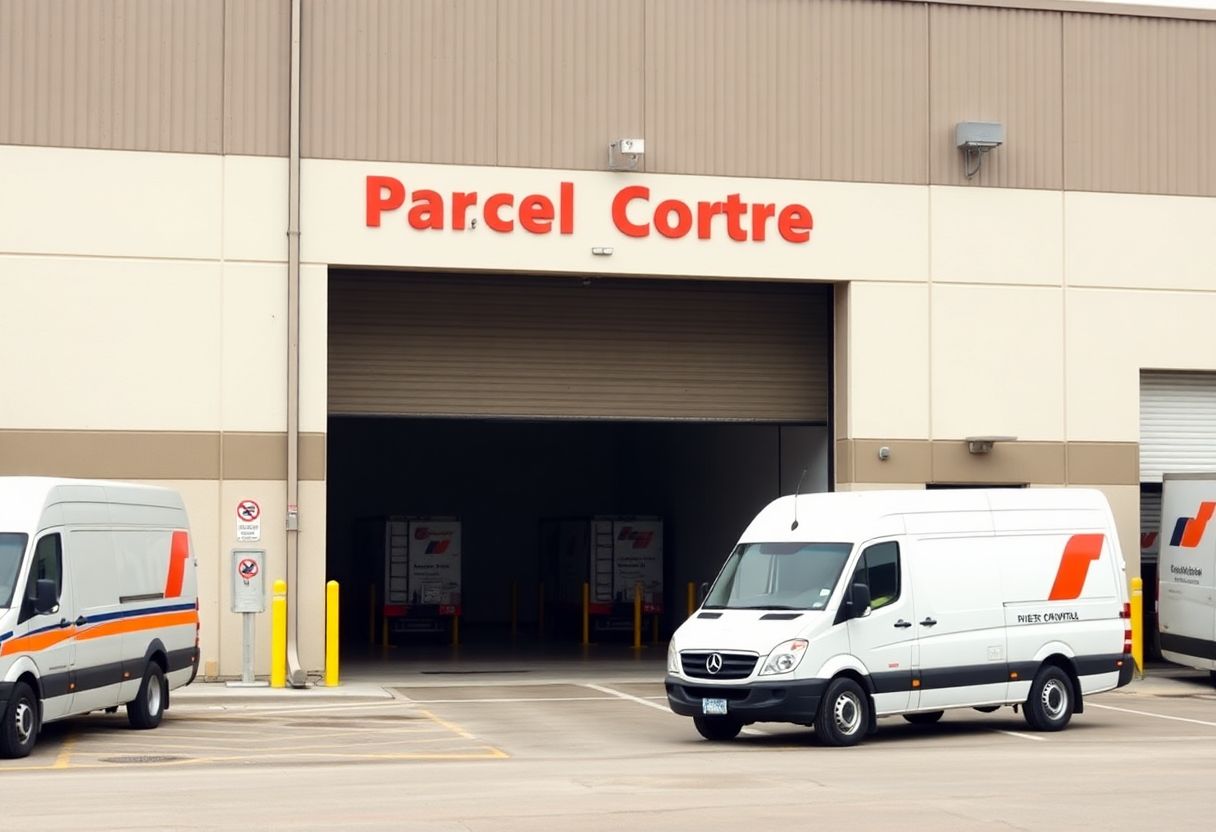
London's shipping yard and parcel depot operations concentrate along Veterans Memorial Parkway, Wilton Grove Road, and the 401 industrial cluster near Wellington Road. The city serves as a regional distribution hub for Southwestern Ontario — parcel depots and LTL consolidation centres here stage freight for next-day delivery to communities from Sarnia to Niagara to Windsor. London Police Service commercial crimes unit has documented after-hours break-in patterns on parcel staging facilities in the Wharncliffe South and Sovereign Road industrial corridors. Cross-border parcel operations — U.S.-bound consolidations that stage overnight before Windsor-corridor carrier pickup — face CBSA documentation obligations on top of standard theft risk. Most London parcel and freight facilities we encounter have existing recording cameras with no dock access control and at least one recent after-hours incident that prompted a security review.
401 Southwestern Ontario hub staging exposure
London parcel depots stage freight for a wide geographic catchment overnight. The predictability of this staging window — sort ends by midnight, carriers arrive at 6 AM — creates a consistent six-hour vulnerability that recording-only cameras don't address.
Cross-border bonded parcel documentation
London facilities consolidating U.S.-bound bonded parcels face CBSA chain-of-custody documentation requirements for any access incident. Our monitoring logs are structured for this requirement from the outset.
Remote tech support transparency
We're direct: on-site tech response from Mississauga takes 2–3 hours. We offset this with a vetted London installation and break-fix partner. Live monitoring is location-independent — our operators dispatch London Police regardless of where our techs are.
Police Coordination — London
London Police Service handles commercial freight and parcel depot incidents across all industrial corridors. We pre-register facility addresses, dock access codes, and authorized carrier windows with LPS dispatch before monitoring goes live. For cross-border bonded-parcel facilities, we also document CBSA contact protocols for incident notifications.
Client Story — London
Regional LTL and parcel hub, Veterans Memorial Parkway — 9 months under monitoring
Regional LTL and parcel staging hub, 30,000 sq ft, Veterans Memorial Parkway. Sort ends midnight; staged until 6 AM pickup for Southwestern Ontario routes. Prior year: two after-hours dock break-ins ($51K combined parcel value). No dock access control. We installed 16 cameras at dock entries, sort floor, staging lanes, and rear perimeter, plus card access on dock doors with midnight auto-lock. Live monitoring midnight to 6 AM. In 9 months: three dock intrusion attempts stopped by audio talk-down. London Police dispatch on one occasion — trespass charge. Zero staging-window losses.

Container Yard Protection
Containers are targets.
Watched containers aren't.
Thieves target unmanned shipping yards because they know the cameras are recording but nobody is watching. Live monitoring changes the equation — intrusions are detected and stopped in real time, not discovered the next morning.
Live and monitoring in days, not weeks
Yard Assessment & Design
We survey your shipping yard — perimeter fences, container stacks, chassis rows, entry gates, and blind alleys. We design camera positions for 100% coverage with optimal operator visibility.
Installation & Integration
4K PTZ cameras, ANPR at gates, two-way audio speakers, and perimeter analytics. All installed without disrupting your operations. System live and monitored within days, not weeks.
24/7 Live Monitoring
Remote operators watch your yard in real time. Unauthorized vehicles or people trigger immediate verification, two-way audio warning, and police dispatch — all before damage occurs.
Full-yard protection in one system
Perimeter Intrusion Detection
AI-powered analytics detect fence-line breaches, unauthorized climbing, and cut fencing. Alerts fire before the intruder reaches your containers — buying critical response time.
Gate ANPR & Vehicle Logging
Every vehicle entering or exiting your yard is logged — licence plate, timestamp, and video. Match deliveries to manifests and identify unauthorized vehicles instantly.
Two-Way Audio Speakers
When operators spot an intruder, they speak directly through yard speakers. A loud, authoritative warning is the fastest deterrent — most incidents end in under 10 seconds.
Container Stack Monitoring
High-mounted PTZ cameras cover container rows with zoom capability to read container numbers. Track movement, verify seals, and detect tampering in real time.
Weather-Hardened Hardware
IP67-rated cameras built for Canadian conditions — snow, ice, rain, extreme heat. Anti-fog, IR night vision, and heated housings keep footage clear in any weather.
Insurance Documentation
Every event is logged with HD video, timestamps, and operator notes. When you need to file a claim or support a police investigation, the evidence is ready in minutes.
Client Results
What shipping yard security clients say
“Container tampering was a recurring issue — our old cameras had terrible night resolution. Riowell replaced everything with 4K thermal for the perimeter and full-colour night vision for the loading docks. The first month we had clear footage of an access attempt and the police made an arrest within two hours.”
“Insurance required us to upgrade our surveillance as a condition of coverage renewal. Riowell came in, assessed the facility, and had a compliant system documented and installed within two weeks. The underwriter signed off immediately.”
“We process 200+ containers a week. Before the Riowell system, we had three cargo claims per month we couldn't dispute. Now every gate transaction has a timestamped video record. Claims dropped to near zero and two we did have were resolved in 48 hours.”
“Our Hamilton shipping yard had two container break-ins in one month — total loss over $180K in electronics. After Riowell set up live monitoring with two-way audio, we've had zero incidents in eight months. The operators caught someone at the fence on night three and scared them off by speaker.”
Protect your cargo tonight.
Eyes on your yard 24/7.
We'll walk your shipping yard, design coverage for every container row, gate, and perimeter section — and have live operators watching within two weeks. Free assessment, no obligation.
Security for Shipping Yards beyond London
We cover London and 14 other Southern Ontario communities. Every location gets the same technicians, the same equipment, and the same response commitment — pick yours below.
Related properties we protect
Frequently Asked Questions
Ready to secure
your business?
Book a free on-site assessment. We'll evaluate your property and design a custom security and IT solution — no pressure, no commitment.