Shrink stops
when they know you're watching.
Canadian retailers lost $9.1 billion to theft in 2024 — an 82% increase from 2018. Ontario alone recorded 61,629 shoplifting incidents in 2023, with 45% involving violence against staff. Organized retail crime rings now case stores the same way they case banks. We install visible, monitored camera systems that deter theft before it happens — and document everything when it does.
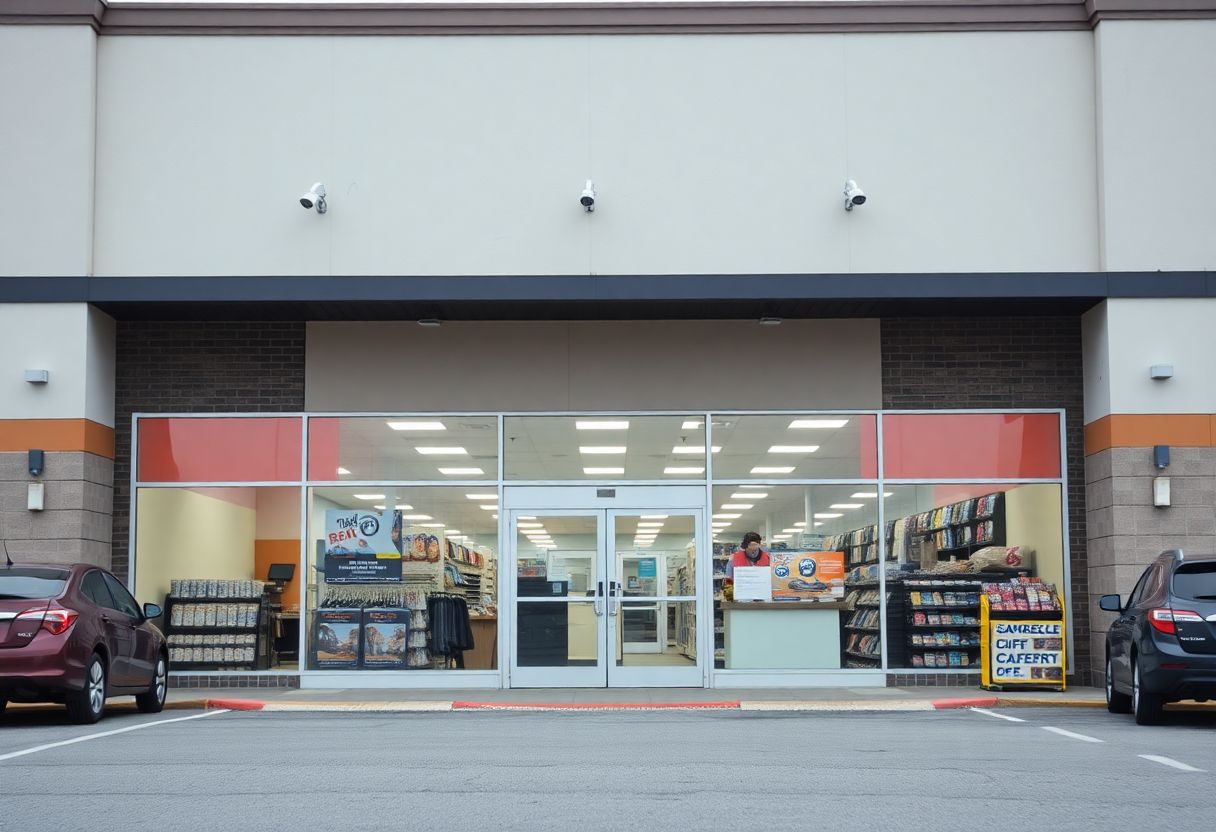
The loss you can count is not the one that keeps you up.
Shrink shows up in a spreadsheet at month end. What actually sits with a retail operator is the afternoon a staff member followed someone into the parking lot, or the week the same group came through the door three times and nobody knew what they were allowed to do about it. Stock is replaceable. The question of whether your people should step in is the harder one.
Usually read by: Store owner / loss prevention manager / operations manager
The store owner
- Your day
- You are on the floor most days, doing the schedule between customers. You know which aisle is blind from the counter, which fitting room corridor nobody can see, and roughly what walks out because you count the empty hangers and the cut security tags in the bin.
- What you're judged on
- That shrink is quietly eating the margin you thought you had, and that one day an incident goes physical with a part-timer in the middle of it. A write-off you can absorb. A staff member hurt over merchandise you would never get back is a different kind of week.
The loss prevention manager
- Your day
- You are pulling footage against transaction logs, building files on repeat offenders, and briefing store teams on what to do and what not to do. Half your job is video review and half of it is telling a keen 19-year-old not to go out the door after anybody.
- What you're judged on
- Being asked for the clip and finding the angle is wrong, the face is a hood at the wrong height, or the retention window already rolled. Your whole case sits on whether one camera was pointed the right way six weeks ago.
The operations manager
- Your day
- You are covering several locations, so you hear about incidents by phone or by email after the fact and rarely see one yourself. Openings, closes, banking runs, stockroom access, and a different manager at each store with a different idea of what counts as an incident worth reporting.
- What you're judged on
- Being the person who has to answer why store four keeps losing stock and store two never does, when both have cameras and neither has a record you can actually compare.
Glass goes in at 3 AM on a Sunday. Who is the phone actually ringing for?
On most stores the alarm panel calls a list: the manager, then the owner, then nobody. Somebody drives across town in the dark to find out whether it was a real entry or a sensor tripping, and if the store is in a plaza the neighbouring tenants have heard the bell for twenty minutes already. With after-hours monitoring the sequence starts earlier: an operator is on the feed within seconds of the breach, confirms whether someone is inside, and police are called on a confirmed entry with a description rather than on an unverified bell. The call you get then is someone telling you what happened and what was taken, not asking you to come and look.
Same protocol whether the site is in Vaughan or anywhere else we cover.
The things people in your position actually ask us
“I do not want my staff chasing anyone. Will more cameras make them braver than they should be?”
It can, if nobody gives them a rule. The rule we suggest is simple and you should write it down regardless of who installs your cameras: staff observe, describe, and stay behind the counter. The camera is what does the confrontation. If your team knows the incident is on video from entry to exit and that the file goes to police without their involvement, the pressure to be the hero drops.
“We get hit during business hours, not at night. What does after-hours monitoring do for me?”
Often nothing, and we would rather say that than sell it. If your losses are daytime concealment and grab-and-run, the money belongs in entrance, aisle and till coverage with resolution that holds up on a face, not in operator hours spent watching a dark store. We only put monitoring on the quote when the property has a real after-hours exposure — a rear door onto a laneway, a high-value stockroom, or a history of break-ins on the block.
“The same group comes back every week and even with video nothing happens.”
That is usually a file problem rather than a camera problem. Isolated clips with no timeline rarely go anywhere. What moves is a package: the same faces across several dates, clear entry footage, an item and value list, and the vehicle if one is visible. We set the coverage up so the repeat-offender file builds itself, and we will say plainly that this is about making the case worth opening, not about any promise of what police do with it.
“My staff will assume all of this is really aimed at them.”
Some will, until they see what it is used for. Till coverage does two things at once — it deters skimming and void abuse, and it clears an honest cashier when a drawer comes up short and nobody can say why. We handle the notice and signage side and document what is recorded and for how long, so the policy exists in writing rather than as something staff hear about second-hand. Stores that tell their team what the cameras cover on day one have far less friction than stores that install quietly.
“We are in a plaza. The landlord already has cameras out front.”
Landlord cameras are almost always positioned for the property, not for your doorway, and getting a clip usually means a request, a delay, and whatever angle happens to exist. They are useful as a second view of the parking lot. They are not a substitute for a camera on your own entrance and your own till, and they will not help you at all on an internal matter.
“We are one store with four staff. Is this sized for someone much bigger than us?”
It should not be. A single store is usually well covered by a handful of cameras: the entrance at face height, each till, the stockroom door, and the rear exit. If your losses are concentrated in one aisle and at one register, that is a small, specific job and we will quote it that way rather than a package with a location count it does not have.
Organized rings. Not opportunists.
The shoplifting surge Ontario retailers are experiencing is not random. The Retail Council of Canada estimates that organized retail crime — coordinated rings using distraction, concealment tools, and resale networks — now drives a significant share of the $9.1 billion lost annually. These groups case stores in advance, identify coverage gaps, and target multiple locations in a single day.
Internal theft compounds the problem. Employee theft — at the register, during restocking, or through void abuse — accounts for a meaningful share of retail shrink that cameras without accountability systems miss entirely. A monitored camera that covers the cash area and stockroom access creates accountability that deters both external and internal theft.
In Vaughan, retail stores face the same organized theft pressure and shoplifting surge affecting retailers across the York Region region. Our camera and loss prevention systems give Vaughan store owners and managers complete visibility — deterring theft before it happens and documenting everything when it does.
Case Study — GTA Specialty Retailer
Mid-size Ontario retailer with two locations reporting $40,000 in annual shrink — attributed to a combination of shoplifting and suspected internal theft at the cash. Riowell installed cameras covering all checkout lanes, stockroom access, and front entrance. Visible deterrence reduced shoplifting incidents 60% in the first quarter. Cash register footage resolved an internal theft investigation within two weeks.
High-Risk Zones in Retail Stores
Retail Store Security in Vaughan — what we actually see.
Vaughan's retail theft environment is dominated by Vaughan Mills — one of the largest outlet and retail malls in Canada — and the Highway 400 service corridor commercial plazas that surround it. Vaughan Mills has been the subject of York Regional Police ORC enforcement operations, with organized groups targeting premium outlet stores, cosmetics, and electronics. The mall's large footprint and high tourist traffic create specific challenges: unfamiliar faces blend with legitimate shoppers, and the transition between mall exits and the 400/407 interchange is under 5 minutes. Independent retailers in the Rutherford Road, Jane Street, and Keele Street plaza pads adjacent to Vaughan Mills see significant spillover ORC activity — groups that case the mall anchor stores also work the adjacent plazas on the same circuit. Return fraud is a known issue in Vaughan's high-volume retail environment, particularly at customer service desks during peak hours.
Vaughan Mills ORC spillover
Organized rings working Vaughan Mills move to adjacent Rutherford Road and Jane Street plaza retailers in the same circuit. Independent retailers in Vaughan's high-density plaza zone are targeted specifically because they have lower LP coverage than the mall anchor stores.
400/407 exit proximity
Stolen merchandise from any Vaughan retailer can clear the mall parking lot and reach the 400/407 interchange in under 5 minutes. The escape geography makes after-the-fact recovery nearly impossible — prevention at the store level is the only effective counter.
Return fraud at high-volume customer service desks
Vaughan's high-traffic retail environment sees organized return fraud as a significant and underreported loss category. POS-synchronized camera coverage at the returns counter closes the gap.
Police Coordination — Vaughan
York Regional Police 4 District covers Vaughan including Vaughan Mills and the Highway 400 service corridor. We register client addresses with 4 District dispatch and provide footage packages formatted for their commercial crime unit's ORC investigation process.
Client Story — Vaughan
Outlet clothing retailer, Vaughan Mills adjacent — ORC deterrence
Independent clothing retailer, 1,900 sq ft, plaza adjacent to Vaughan Mills. Experiencing periodic ORC-style clearout incidents ($3,200–$4,500 per event, three events in 6 months). We installed 13 cameras covering all entrance points, high-value display sections, fitting room corridor, checkout, and stockroom access. Visible coverage deterred two subsequent ORC-type group entries — scouts entered, assessed coverage, left without merchandise. Zero clearout incidents in 11 months of monitoring. Monthly monitoring cost: $410.
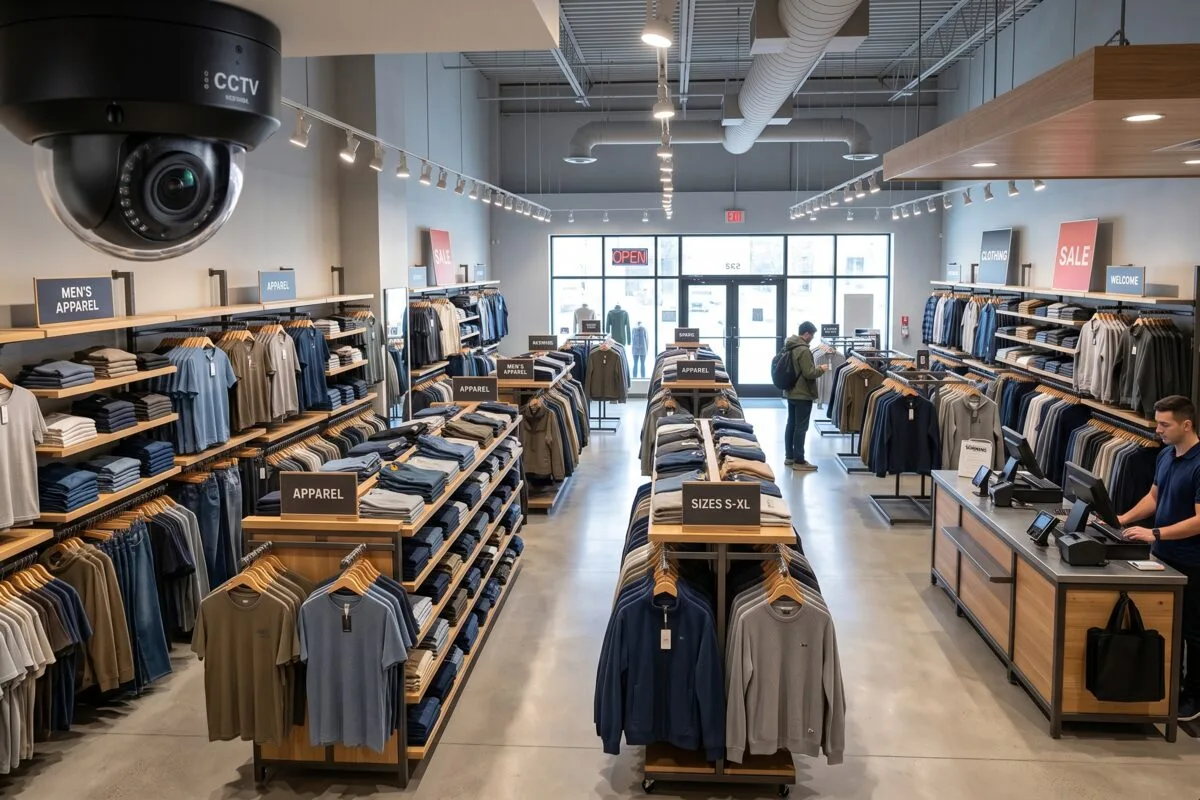
Visible Deterrence
Cameras they can see
are the ones that work.
The most effective retail security camera is the one a shoplifter sees before they decide to steal. Visible, well-positioned cameras at entrance points, checkout lanes, and high-value areas create immediate deterrence — not just evidence. Monitoring adds a second layer: a live operator who can alert staff in real time when concealment behaviour is detected.
Loss prevention live in under a week
Store Walk & Coverage Map
We walk every aisle, checkout lane, stockroom access point, and entrance. We identify your current blind spots — the zones organized shoplifters and dishonest employees exploit. You receive a written coverage map before we propose anything.
Camera & Monitoring Installation
4K cameras at all entry/exit points, checkout lanes, stockroom access, and high-value display areas. Visible placement for maximum deterrence. After-hours motion monitoring on all exterior entry points. Installed with minimal disruption during off-hours where possible.
Live Monitoring & Incident Response
Footage accessible from any device — review by shift, by camera, or by incident. After-hours breach is reviewed by a live operator, who calls police once the intrusion is confirmed. Incident clip packages ready for police or insurance within minutes.
Complete retail loss prevention
Checkout & Cash Area Coverage
Cameras covering every register and cash handling area with clear overhead and angle views. Timestamped footage available for any void, return, or transaction dispute. Deters register skimming and void abuse without confrontational staff policies.
Entrance & High-Value Display Cameras
4K cameras at all entrance points capture faces and clothing detail in any lighting. High-value display coverage creates visible deterrence for grab-and-run incidents. Footage quality supports police identification without enhancement.
After-Hours Monitoring
Live operators monitor your store after close. Any perimeter breach or motion event puts an operator on the feed within seconds, and the call to police follows a confirmed entry. After-hours break-in attempts documented and reported within minutes. No silent alarms that get ignored.
Stockroom & Receiving Dock Control
Camera coverage of stockroom access doors and receiving docks — the zones where internal theft and delivery fraud occur with no customer witnesses. Access-controlled entry available for stockrooms with audit trail on every door event.
Blind Aisle & Fitting Room Coverage
Cameras positioned to cover blind aisles and fitting room corridors — without violating privacy inside rooms. Concealment behaviour visible to floor staff via monitor feed. Deters the corridor staging that organized rings use before clearing a section.
Insurance & Incident Documentation
Every incident produces a timestamped clip package ready for police, your insurer, or legal proceedings. Professionally monitored camera systems support commercial property and liability insurance premium reductions. Documentation formatted to insurer requirements on request.
Client Results
What retail store security clients say
“We run a chain of six locations. Riowell standardized the camera and alarm setup across all of them — same system, same interface, same monitoring protocol. For the first time I can see all six stores from one dashboard. Shrinkage is down 38% chain-wide compared to last year.”
“A grab-and-run group hit us twice in two weeks. After Riowell added cameras at the entrance and behind the service counter, they hit a third time — but this time we had full footage. The police made two arrests based on the video. We haven't had an incident in four months.”
“Our POS area had a cashier accuracy issue we couldn't track. Riowell added overhead cameras at each register — the resolution was high enough to read bills on the counter. Within 30 days, we identified the issue, corrected it, and haven't had a cash variance over $20 since.”
“We were losing $30,000–$40,000 a year to shrink and couldn't figure out how much was shoplifting versus internal. After Riowell installed cameras covering checkout and the stockroom door, shoplifting dropped immediately — and cash discrepancy incidents stopped within two weeks. The footage paid for the system in the first month.”
Stop the shrink.
Before it becomes a write-off.
Book a free store walk-through. We'll map every blind spot, coverage gap, and after-hours vulnerability — and design a system that deters before it documents.
Security for Retail Stores beyond Vaughan
We cover Vaughan and 14 other Southern Ontario communities. Every location gets the same technicians, the same equipment, and the same response commitment — pick yours below.
Related properties we protect
Frequently Asked Questions
Ready to secure
your business?
Book a free on-site assessment. We'll evaluate your property and design a custom security and IT solution — no pressure, no commitment.