Every shift accountable.
Every close protected.
Up to 85% of restaurant theft is committed by employees — at the register, during inventory, or through void and comping abuse. After-hours, cash businesses with predictable closing routines and accessible points of entry are primary break-in targets. We install camera systems that create accountability through every shift and monitoring that protects your location after the last staff member leaves.
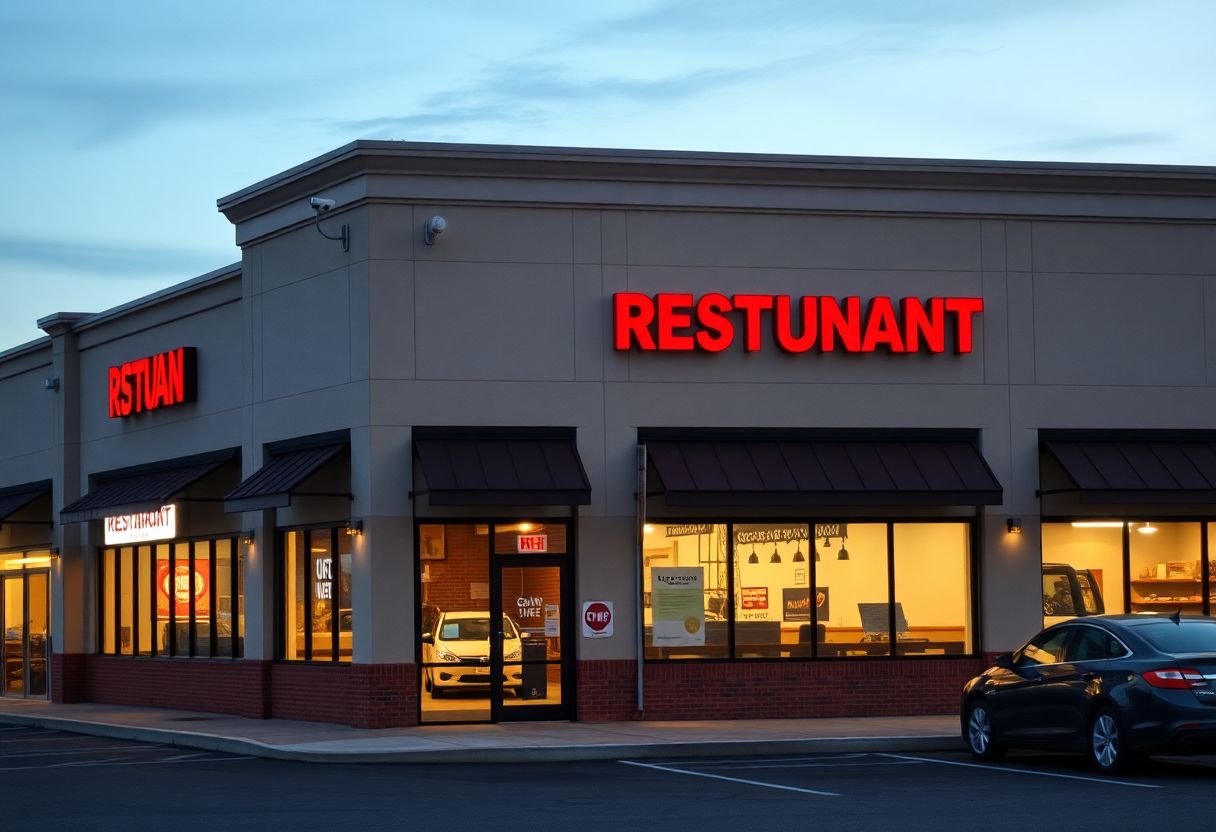
The awkward part is not the theft. It is who it might be.
Most restaurant owners do not arrive here because of a break-in. They arrive because the deposit has been light on the same two shifts for a month, the comps look wrong, and the person they would have to ask about it has worked there since the place opened. That is a different conversation than a broken back door, and it is the one that usually gets put off.
Usually read by: Restaurant owner / QSR operations manager / franchise operator
The owner-operator
- Your day
- You are in three or four days a week, doing the ordering and the schedule, and cashing out at the end of the night. You know the float, you know what a Friday should do, and you can feel a bad week before the reconciliation confirms it.
- What you're judged on
- Food cost and labour are already tight. A steady, unexplained few hundred a week is the difference between a good month and a flat one, and the part you dread is not the money — it is having to look at a long-serving staff member differently with nothing solid to go on.
The QSR operations manager
- Your day
- You are across several units, comparing void and discount reports, drive-thru times, and cash variance by shift. You see the pattern in the numbers long before you see the room it happened in, and you are usually reviewing a store you were not standing in.
- What you're judged on
- Being asked which store and which shift, and only being able to answer with a spreadsheet. Without a till view tied to the transaction, every conversation with a store manager ends in the same place — maybe it is miscounts, maybe it is not.
The franchise operator
- Your day
- You run your units to a brand standard as well as your own. Someone else specifies the fit-out, the signage, sometimes the equipment, and you carry the cost of anything that falls outside what the agreement already covers.
- What you're judged on
- An incident that reaches the brand — a customer injury on your patio, a video that spreads, an inspection finding. You are measured on the units, but a single bad night can turn into a conversation with the franchisor you did not schedule.
The back-of-house door goes at 2 AM. Who is actually getting up?
In most restaurants it is the owner, then the closing manager, then nobody — and whoever answers is deciding, half-asleep, whether to drive in for what is probably the wind or a raccoon on the patio. The honest version is that a lot of restaurant break-ins are discovered by the morning prep cook. With after-hours monitoring the door contact puts an operator on the feed in seconds; they confirm whether someone is actually inside and call police on a real entry, not on a sensor. That matters most in the window you cannot cover any other way — after the deposit is done and before the first person arrives to turn on the fryers.
Same protocol whether the site is in London or anywhere else we cover.
The things people in your position actually ask us
“My closing manager has been with me nine years. I am not putting a camera on him.”
You are not putting a camera on him, you are putting one on the till and the safe area. That distinction is the whole point. If he is doing nothing wrong, coverage is the only thing that will ever prove it when a drawer is short and there were three people with access that night. Most long-serving staff are relieved by it once they understand it removes them from a permanent short list.
“My void and comp report tells me nothing. Everything on it looks plausible.”
It does until you can see the till at the moment of the void. A refund on a transaction where nobody was standing at the counter reads differently on video than it does in a column. We position for the drawer and the screen so any single transaction can be pulled against the timestamp. If your variance is concentrated on one shift at one register, that is a two-camera job, and we would rather tell you that than build out the whole building.
“Kitchen staff will say we are spying on them, and I cannot afford to lose anybody.”
Coverage aimed at the walk-in door, the receiving door and the till is different from coverage aimed at people, and staff work that out quickly. We handle the notice and signage side and document what is recorded and for how long so you have something written to point at. Where it gets sensitive is anything near break areas or change areas — we design those out, and we will tell you when a position you asked for is one we would not install.
“We are almost all tap now. There is barely any cash to steal.”
Then your exposure has moved rather than disappeared. Card-heavy rooms lose on voids, refunds to the wrong card, comps, and unrung sales at the bar rather than on the float. If your deposit genuinely never sits overnight and the safe is empty at close, say so — it takes the after-hours cash argument off the table and changes what we would put in front of you.
“Corporate has a specification for camera systems. I do not want to install twice.”
Send us the security section of your agreement before we quote. Most brand specifications cover camera placement, resolution and retention, and are straightforward to meet. Where a brand names a specific vendor or platform, we will tell you that up front rather than after the install, and that may mean the right answer is that we are not the right supplier for those units.
“The problem is the parking lot at last call, not anything inside.”
Then that is where the cameras go. Shift change and the hour after close have their own pattern — staff walking to cars, arguments that started inside finishing outside, and vehicle damage claims that arrive by phone three days later. Lot coverage at plate and face height settles most of those in one review, and it protects your staff on the walk out as much as it protects you from a claim.
Your biggest risk punches out every night.
Restaurant theft operates differently from retail shoplifting. The primary threat is internal: employees with register access who skim cash, process fake voids, over-comp orders, or walk out with inventory during closing. Without camera coverage over cash handling areas, these losses are nearly impossible to detect — they show up as unexplained shrink that gets attributed to waste.
After-hours, restaurants present a different risk: cash in the safe, accessible points of entry, and no staff present. Break-ins targeting QSRs and casual dining locations typically occur between midnight and 4 AM — after the deposit is made but before morning prep staff arrive. Monitored camera systems close both windows.
In London, restaurants and QSRs face the same cash accountability and after-hours break-in pressures seen across the Southwestern Ontario region. Our camera systems give London restaurant owners complete visibility over every shift — deterring internal theft and protecting the location after close.
Case Study — GTA QSR Franchise
Franchise operator with four locations reporting unexplained cash shortfalls averaging $800/week across the portfolio. Cameras installed covering all cash handling stations. Void and discount patterns reviewed over 30 days identified one employee processing false refunds at one location — $12,000 in losses documented and recovered through the franchisee's insurance. Shortfalls eliminated within the first billing cycle after installation.
High-Risk Areas in Restaurants
Restaurant Security in London — what we actually see.
London's restaurant security problem is concentrated in its Richmond Street bar district and the Western University / Fanshawe College areas — the largest licensed entertainment corridor in western Ontario outside of Toronto. Richmond Street from Oxford Street south to the downtown core hosts over 40 licensed establishments, most of which close between 2 and 3 AM with significant weekend cash. London Police Service's downtown unit is active but the volume of incidents in this corridor — customer disputes, assaults, and after-hours break-ins — is high relative to available resources. Independent restaurant operators outside the Richmond Street core, on Commissioners Road, Wellington Road, and the Oxford Street East commercial strip, face a different but consistent risk: after-hours break-ins targeting QSR and casual dining locations with accessible entry points. Internal theft is well-documented at London's high-volume bars and casual diners, where cash tip management and bar inventory tracking are informal and where student staff have high turnover.
Richmond Street bar district — the highest-density risk corridor in western Ontario
40+ licensed establishments on a single strip closing between 2 and 3 AM with high cash volumes. After-hours break-ins in this corridor are documented annually. Live monitoring with London Police dispatch stops the attempt before the safe is reached.
Western / Fanshawe student staff churn
London's two major universities produce the same seasonal hire-and-cycle staffing pattern as KW — a wave of new hires every September who rotate out by April. Visible POS cameras stop register testing in the first week.
Suburban corridor break-ins
Commissioners Road, Wellington Road, and Oxford Street East QSRs and casual diners are hit after hours in a pattern consistent with GTA commercial corridors. Cash-heavy closing businesses with predictable routines are the target. Live monitoring changes the risk equation.
Police Coordination — London
London Police Service covers all city commercial corridors. The downtown unit is familiar with Richmond Street's licensed establishment pattern. We pre-register client addresses with downtown dispatch and flag licensed establishments in our registration so officers have the context on arrival.
Client Story — London
Bar and kitchen, Richmond Street — cash accountability and after-hours protection
Licensed bar with full kitchen, Richmond Street, London. 90 seats, closes at 2:30 AM. Prior year: two break-ins (total $3,800 taken), ongoing bar inventory discrepancies. We installed 12 cameras covering the full bar, all POS terminals, rear kitchen exit, and front entrance. After-hours monitoring, 3 AM to 10 AM. In 12 months: three after-hours approaches deterred before entry attempted. Bar inventory discrepancies resolved using footage in week 4 (two bartenders confirmed skimming free pours, $2,200 documented). HR action completed. Monthly cost: $510.
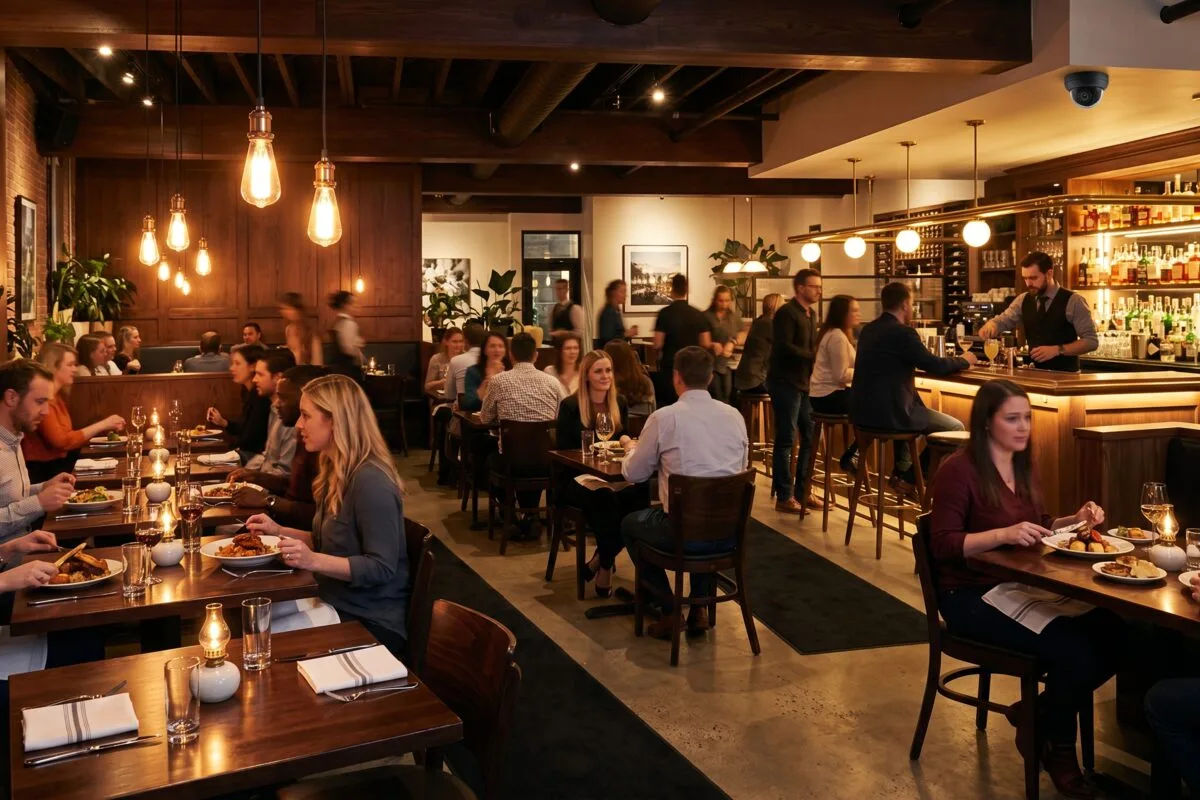
Cash Accountability
Cameras don't catch theft.
They prevent it.
An employee who knows their register is covered doesn't skim it. A closing manager who knows the safe area is monitored doesn't make unauthorized cash withdrawals. Camera visibility over cash handling areas reduces internal theft not primarily by catching offenders — but by removing the conditions that make it feel safe to try.
Full restaurant coverage in under a week
Walk-Through & Cash Flow Mapping
We walk your front-of-house, back-of-house, bar, and entry points. We map everywhere cash changes hands, where inventory is stored and moved, and where after-hours access is possible. You see the vulnerability picture before we propose anything.
Camera Installation
4K cameras covering all POS terminals, cash handling areas, bar stations, back-of-house access, and all entry and exit points. Positioned to see register screens and cash drawers without obstructing workflow. Installed overnight or during a closure to avoid disruption.
Remote Access & After-Hours Monitoring
Owner and manager access to all cameras from any device — review by shift, terminal, or date. After-hours motion monitoring on all entry points. Breach triggers live operator verification and the operator calls police with a live description. Incident footage packaged for police or insurance on request.
Complete restaurant security coverage
POS & Register Coverage
Cameras positioned to cover every POS terminal and cash drawer from an angle that captures transaction activity. Timestamped footage synchronized with your POS log allows any transaction to be reviewed against the camera record. Deters register skimming and false void processing.
Bar & Beverage Station Monitoring
Camera coverage of bar stations and beverage dispensing areas reduces free-pouring, unrecorded sales, and bottle theft — among the highest-margin loss categories for licensed restaurants. Visible coverage changes staff behaviour without creating a confrontational atmosphere.
Back-of-House & Walk-In Coverage
Cameras covering walk-in cooler access, dry storage, and receiving areas create accountability for inventory movement during prep, service, and closing. Reduces portioning abuse and closing-shift inventory theft that rarely surfaces in weekly counts.
After-Hours Monitoring
Live operators monitor all entry points after close. Any perimeter breach or door contact brings an operator onto the feed within seconds, and police are called on a confirmed break-in. Cash business after-hours break-ins stopped before the safe is reached. Footage and incident report ready for police within minutes.
Remote Owner & Manager Access
Access every camera at every location from your phone or browser — live or recorded, by terminal or by date. Shift review before payroll. Incident clip sharing with your insurance broker or legal team without involving a third party. Full control stays with the owner.
Multi-Location Management
Franchise and multi-unit operators manage all locations from a single platform. Location-level access for managers; portfolio-level access for owners. Incident patterns visible across the portfolio — consistent coverage regardless of which location, which shift, or which manager.
Client Results
What restaurant security clients say
“We had a break-in through the back kitchen door at 3 AM — the thief knew our old camera had a blind spot. Riowell covered every exterior door plus the cash office. Six months later, someone tested the same door. Monitoring called police before they were inside. Nothing was taken.”
“A customer claimed our staff damaged their vehicle in the parking lot. We had no footage. We settled for $3,200 because we couldn't disprove it. After Riowell installed lot cameras, we had the same type of claim six months later — our footage showed the car was already damaged on arrival. Claim dropped.”
“Cash handling after close was an area we never had visibility into. After adding cameras to the POS and safe area, end-of-night cash variances stopped within two weeks. My accountant noticed the change in our monthly reconciliation before I even told her about the cameras.”
“We had cash shortfalls every week for six months and couldn't figure out where they were coming from. After Riowell installed cameras over the registers and bar, we reviewed footage against our POS log and found the pattern in two days. The case was documented and resolved in three weeks. The cameras paid for four years of monitoring in one month.”
Every shift accountable.
Starting Monday.
Book a free walk-through of your restaurant. We'll map every cash handling point, coverage gap, and after-hours vulnerability — and design a system that creates accountability from the first shift after installation.
Security for Restaurants beyond London
We cover London and 14 other Southern Ontario communities. Every location gets the same technicians, the same equipment, and the same response commitment — pick yours below.
Related properties we protect
Frequently Asked Questions
Ready to secure
your business?
Book a free on-site assessment. We'll evaluate your property and design a custom security and IT solution — no pressure, no commitment.