Secured after hours.
Every door, every floor.
A tenant moves out and half their fobs never come back. The cleaners need the building at nine, a contractor needs the loading dock at six, and when something goes missing from a suite you are the one they call — even when it sits on their side of the fitout line. We install access control and camera coverage that tells you which credential opened which door and when, so those conversations end with a log instead of an argument.
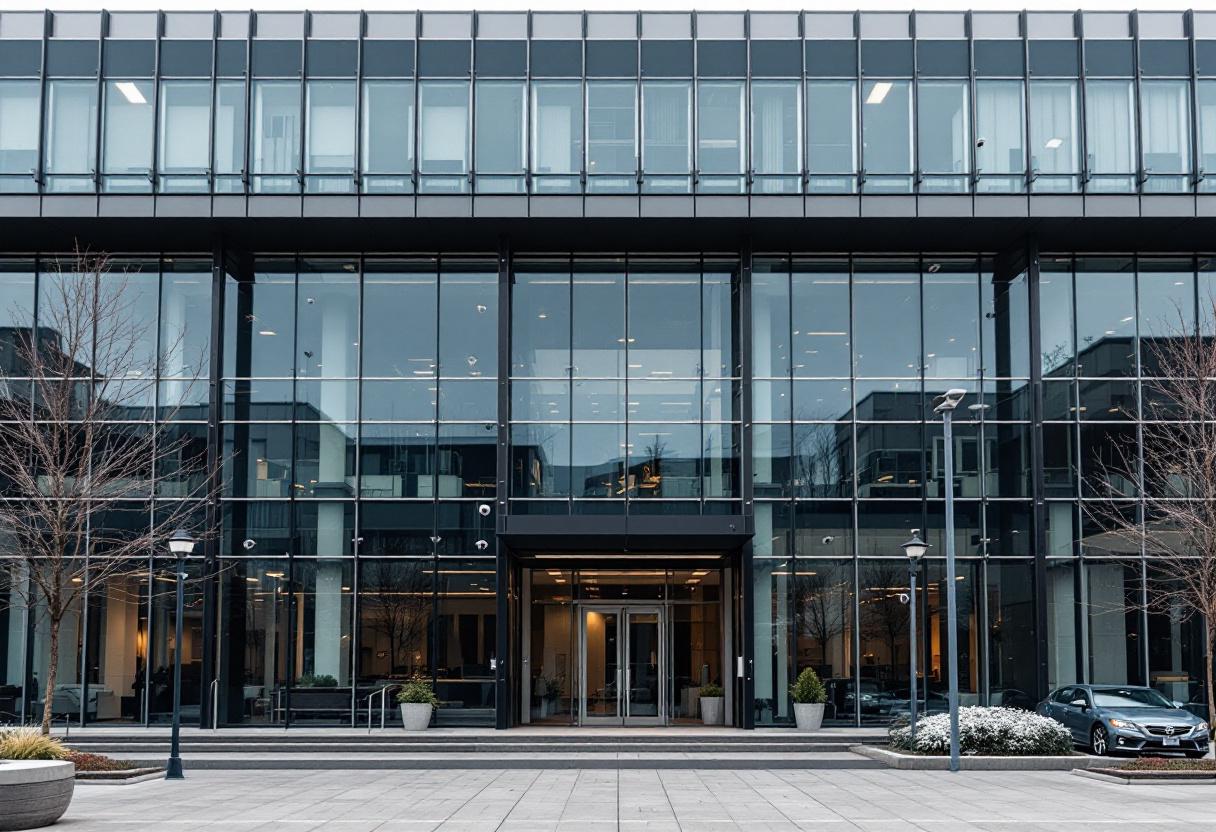
The building is fine. The credential list is the problem.
Nobody calls us because a lock failed. They call because a tenant moved out in March, half the fobs came back, and a suite on four got cleaned out in June — and there is no way to say which of those two facts is related to the other. Everything below is about the people who have to answer that question.
Usually read by: Building owner / facility manager / office administrator
The facility or property manager
- Your day
- You hold the master keys, the elevator recall procedure, the after-hours list and the cleaning contract. Your week is a propped stairwell door on six, an elevator contractor who needs the machine room at seven in the morning, a leasing agent showing a vacant suite and forgetting to lock it, and a tenant who wants a fob reissued today.
- What you're judged on
- You are measured on the things nobody notices until they break, and every incident arrives as an argument about whether it was base-building or the tenant's own fitout. Without a record of which credential opened which door, that argument goes the same way every time, and it goes against you.
The owner or asset manager
- Your day
- You see the building through a rent roll, an operating budget and a capital plan. You are not in the lobby at nine at night. You are looking at renewal risk, a tenant who put a security concern in writing during lease negotiations, and an insurance renewal that now asks specific questions about access control.
- What you're judged on
- A security incident that turns into a rent abatement discussion, a tenant that does not renew, or a claim where the insurer asks what controls were actually in place on the doors the intruder used. The exposure is not the stolen equipment — it is the lease conversation that follows it.
The office administrator inside a suite
- Your day
- You issue and collect fobs for your own staff, sign for deliveries, buzz in the courier, and hold the key to the storage room and the IT closet. You are the person who notices that the same fob is still on a departed employee's lanyard photo in the staff directory.
- What you're judged on
- Being the one who let somebody in. When a laptop goes missing from a desk, the first question is who had access, and the honest answer at most firms is a spreadsheet that nobody has reconciled since the last office move.
A stairwell door reads as propped at 2:40 AM. Then what?
At most buildings today the alarm goes to a call list — the property manager's mobile, then the owner, then a superintendent who may or may not be in the building. The person receiving it has no way to tell a cleaner who wedged the door open while emptying bins from someone who came up from the parking level, so the realistic choices are drive in or go back to sleep. With door contacts tied to camera coverage and an operator on the other end, the door event is verified before anyone is woken: the operator sees the cleaning cart, notes it, and the door gets closed — or sees a person who does not belong on that landing, and the call you get is a report with a clip attached rather than a question you cannot answer at 2:40 in the morning.
Same protocol whether the site is in Hamilton or anywhere else we cover.
The things people in your position actually ask us
“Everything inside the suite is the tenant's responsibility. Why is this my spend?”
Because the tenant's loss almost always travels through base-building space to get there — the loading dock, the freight lobby, a stairwell door, the parking level. You are not being asked to secure their fitout. You are being asked to prove your side of the line held, and the only thing that does that is a door-by-door log with time stamps. It is also the single fastest way to end those escalations, because you answer with a record the same day instead of a week of phone calls.
“The cleaners come in at nine at night. They are going to prop the door anyway.”
They will, if badging in means crossing the building twice with a cart. Most propping is a workaround for a bad path, not defiance. The fix is usually scheduling credentials to the hours the contract actually covers, putting a reader on the door they genuinely use — normally the dock or a service corridor — and telling the supervisor that the door is on contact. Propped-door alerts stop being a nuisance once the crew has a route that does not require propping anything.
“We already have a card system. It just is not accurate any more.”
Then the first piece of work is a reconciliation, not hardware. We export the credential list from your controller, put it beside the current tenant roster and the cleaning and trades contracts, and show you the fobs that are active for firms that left. In some buildings that exercise is the whole project and we say so — if your readers are on a supported platform and the panels are healthy, replacing them would be selling you something you do not need.
“The building is half vacant. Should we wait until we lease up?”
The vacant period is when the exposure is highest, because suites are open to trades and agents and nobody owns locking up at the end of the day. That said, phasing is reasonable: dock, freight lobby, stairwell doors and riser rooms first, tenant-floor readers as suites fill. That order costs less now and does not get rebuilt later.
“Who is allowed to see the access logs? My tenants keep asking for them.”
That is worth settling in writing before the first incident, not during one. Logs record identifiable people, so we set up role-scoped views — building management sees the building, a tenant administrator sees their own suite's doors and nothing else — and we confirm the retention period and the release process against your lease language and your own privacy obligations rather than assuming. What we will not do is hand a tenant an unfiltered export of everyone who used the lobby.
“Do we have to re-badge every tenant in the building?”
Usually not all at once. Most buildings run a parallel period: new credentials issued at the floor level as tenants come in to collect them, old ones deactivated in batches, with the dock and stairwell doors cut over first because that is where the risk is. If your building has a concierge until eleven and only two doors in use after that, the honest scope is readers on those two doors and a clean credential list — not a building-wide re-badge and a monitoring contract.
Your credential list is older than your tenant list.
Every building we assess has the same quiet problem: fobs issued to people who left, tenants who vacated without returning the full set, and a cleaning contract that changed hands twice while the same credentials kept working. Nobody made a mistake. Turnover just happens faster than anyone gets around to reconciling a spreadsheet against a controller, and a fob that still opens a stairwell door does not announce itself.
The second exposure is after-hours service traffic. Cleaners, HVAC techs, elevator contractors, and courier drops all need legitimate access outside business hours, and the practical workaround at almost every building is a propped door or a shared code. When a suite gets hit, the tenant calls you first — and the argument about whether it was base-building or their own fitout is unwinnable without a record of which credential opened which door at what time.
In Hamilton, commercial office buildings face rising after-hours break-in pressure across the Hamilton-Wentworth business district. Our camera and access control systems give Hamilton property owners and facility managers full visibility and after-hours protection — from every door to every floor.
Case Study — Multi-tenant office building, GTA
A suite on the third floor reported equipment missing over a long weekend. No forced entry anywhere in the building, and the tenant's position was that base-building security had failed. The existing system logged nothing below the lobby turnstile. We put readers on the stairwell doors, the loading dock, and the riser rooms, added cameras on the dock and the freight lobby, and ran a full credential reconciliation against the current tenant roster — which turned up active fobs belonging to a firm that had moved out the previous year. The owner has had no repeat incident, and the property manager now answers tenant escalations with an access log the same day instead of a week of phone calls.
Exposed Areas in a Commercial Office Building
Office Building Security in Hamilton — what we actually see.
Hamilton's commercial office market is shaped by the city's industrial heritage and its ongoing transformation. The downtown King Street West and James Street South office corridor is the city's primary Class B office environment — professional services, government offices, and non-profits concentrated in older mid-rise and converted heritage buildings with security infrastructure that often hasn't been updated in 10–15 years. The suburban office corridor along Upper James and the Ancaster business park clusters off Highway 403 carry newer commercial buildings with more modern security infrastructure but lower ambient security presence after hours. Hamilton Police Service's commercial property unit has noted persistent after-hours break-ins in the downtown office corridor, where older building entry systems are frequently the point of forced entry.
Downtown heritage building security retrofits
James Street and King Street West office buildings are often older heritage structures with non-standard entry configurations. We specialize in retrofitting camera and access control into older buildings without compromising heritage interiors — surface-mount and concealed-cable approaches designed for buildings where cutting into walls isn't an option.
After-hours risk in the downtown core
Hamilton's downtown office corridor empties significantly after 6 PM, and several blocks adjacent to the office zone have higher street-level crime pressure. After-hours monitoring on downtown Hamilton office buildings catches intrusion attempts at the door, not in the morning footage review.
403 business park — newer buildings, limited monitoring
Ancaster and Stoney Creek office parks along the 403 have modern physical infrastructure but limited after-hours security presence. Suburban business park buildings are a common after-hours break-in target because they're isolated and unmonitored overnight — active monitoring changes this equation.
Police Coordination — Hamilton
Hamilton Police Service handles commercial property incidents city-wide. We coordinate building address registration and after-hours access protocols with HPS dispatch. For downtown core buildings with non-standard entry configurations, we document each access point clearly so responding officers know exactly where to go and how to enter.
Client Story — Hamilton
5-storey office building, King Street West — access and camera upgrade
32,000 sq ft multi-tenant office building, King Street West, Hamilton. Tenants: law firm, accounting practice, government services office. Prior 18 months: two after-hours break-ins (combined loss $44,000 — equipment, cash, confidential client files), HPS commercial unit had informally recommended security upgrade. Existing cameras: lobby and one stairwell, 7-day retention. We installed 12 cameras (all building entrances, each floor corridor, server room), card access on server room and both secure tenant suites, after-hours monitoring from 6:30 PM to 7:30 AM. In 10 months: one intrusion attempt intercepted at the rear entrance — operator dispatched HPS, suspect detained. Zero successful break-ins. Law firm tenant cited security improvement in lease renewal decision.
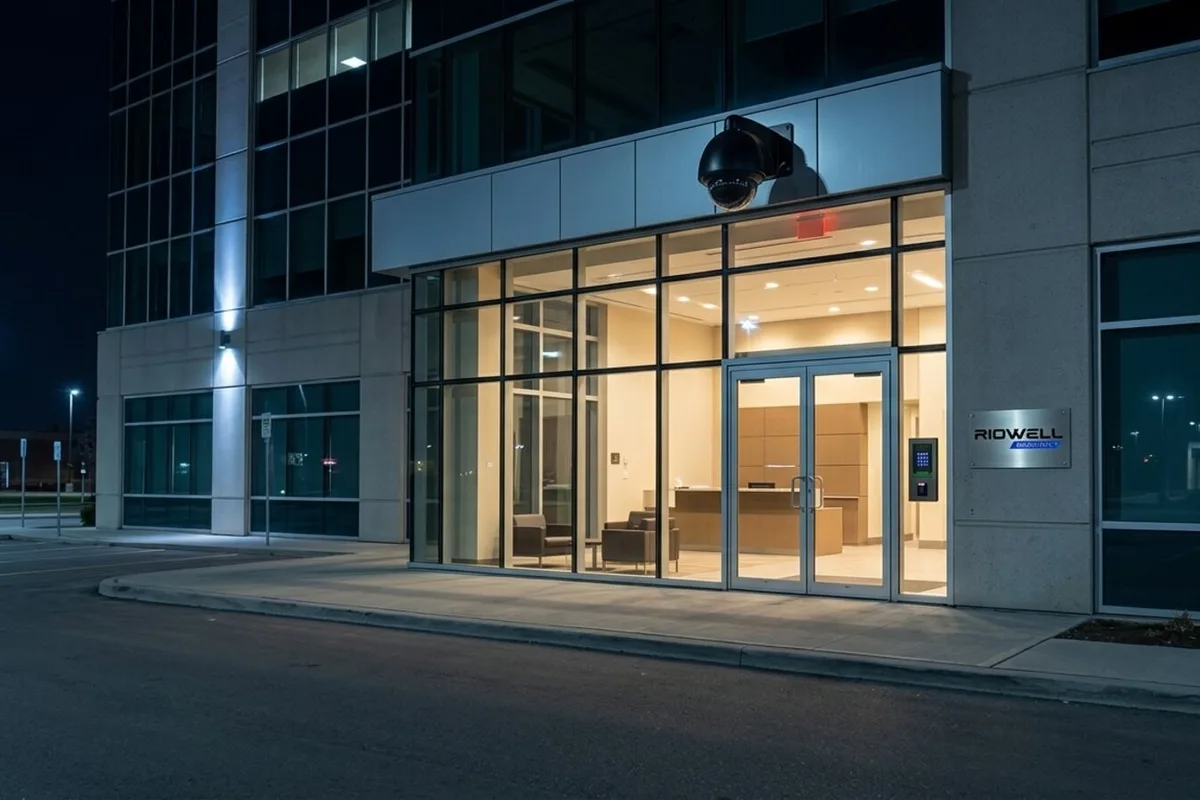
After-Hours Protection
Most office break-ins go
undetected until morning.
Thieves know office buildings empty at 6 PM. Server rooms, reception desks, and storage closets sit unattended for 12+ hours. Live monitoring changes the equation — unauthorized access is detected and stopped in real time, not discovered when staff arrive.
Fully secured in under two weeks
Building Assessment & Design
We walk your building floor by floor — lobby, reception, server room, storage, parking, and perimeter. We identify every after-hours vulnerability and design coverage that matches your tenant mix, lease obligations, and liability exposure.
Installation Without Disruption
Cameras, card readers, and wiring are installed outside business hours where needed. No disruption to your tenants' operations. System active and monitored within two weeks of signed assessment.
After-Hours Monitoring & Alerts
After 6 PM, live operators watch your building. Any unauthorized access triggers immediate verification and police dispatch. Property managers receive real-time alerts with video clips on their phone.
Complete office building protection
4K Lobby & Perimeter Cameras
High-resolution cameras at every building entrance, lobby, and parking area. Clear facial and licence plate detail for police investigations. Footage stored 30 days, searchable by time or camera.
Floor-by-Floor Access Control
Card readers on server rooms, supply closets, executive suites, and sensitive areas. Grant and revoke access per tenant or employee. Full audit trail for compliance and insurance.
After-Hours Monitoring
Human operators monitor your building after close. Any motion in restricted zones triggers verification and response — not just a recording. When it is a real intrusion, police are called on a verified event, with the operator describing what they can see.
Elevator & Stairwell Coverage
Cameras in every elevator cab and stairwell eliminate the blind spots intruders use to move undetected between floors. Essential for multi-tenant and multi-floor buildings.
Visitor & Contractor Management
Intercom and access systems at the main entrance let reception or property managers verify and admit visitors remotely. Temporary access codes for contractors — revoked automatically when work ends.
Insurance & Compliance Documentation
Every incident is logged with HD footage, timestamps, and access records. When you need to file a claim, respond to a legal demand, or satisfy an insurance audit, the documentation is ready in minutes.
Client Results
What office building security clients say
“We had a rash of laptop thefts in our open-concept floor — nobody saw anything. Riowell put cameras on every exit and the server room door. We found the pattern within a week and our IT team implemented better device protocols. Zero thefts in the eight months since.”
“A former employee retained a key fob after offboarding. Riowell replaced our old key system with card access and programmed it so credentials are deactivated instantly on termination. We also got an audit trail now — who accessed what and when. HR loves it.”
“After-hours cleaning crews were entering areas they shouldn't. Riowell set up access zones so cleaners could only enter common areas and washrooms, not offices or filing rooms. First time we've had real separation of access without changing the locks every year.”
“Our Mississauga office had a break-in on a Friday night — someone got through a side door and took $40,000 in equipment. Riowell came in, installed cameras and card access on every controlled entry, and set up after-hours monitoring. Eight months later, we had one attempt that was stopped before the door opened. Insurance dropped our premium 17% when we sent the system specs.”
Secure your building tonight.
Every door. Every floor.
Book a free assessment of your office building. We'll identify every after-hours vulnerability, design coverage for every entry point and sensitive area, and have your system live within two weeks.
Security for Office Buildings beyond Hamilton
We cover Hamilton and 14 other Southern Ontario communities. Every location gets the same technicians, the same equipment, and the same response commitment — pick yours below.
Related properties we protect
Frequently Asked Questions
Ready to secure
your business?
Book a free on-site assessment. We'll evaluate your property and design a custom security and IT solution — no pressure, no commitment.