Open to anyone by day.
Empty and unwatched by night.
A clinic is one of the few commercial properties that invites strangers in without appointment screening, stores controlled drugs and sedation agents behind an interior door, and then sits dark from six in the evening until seven the next morning. We design access control, cameras and monitored alarms around that exact shape of day — and give the practice manager a record of who went where.
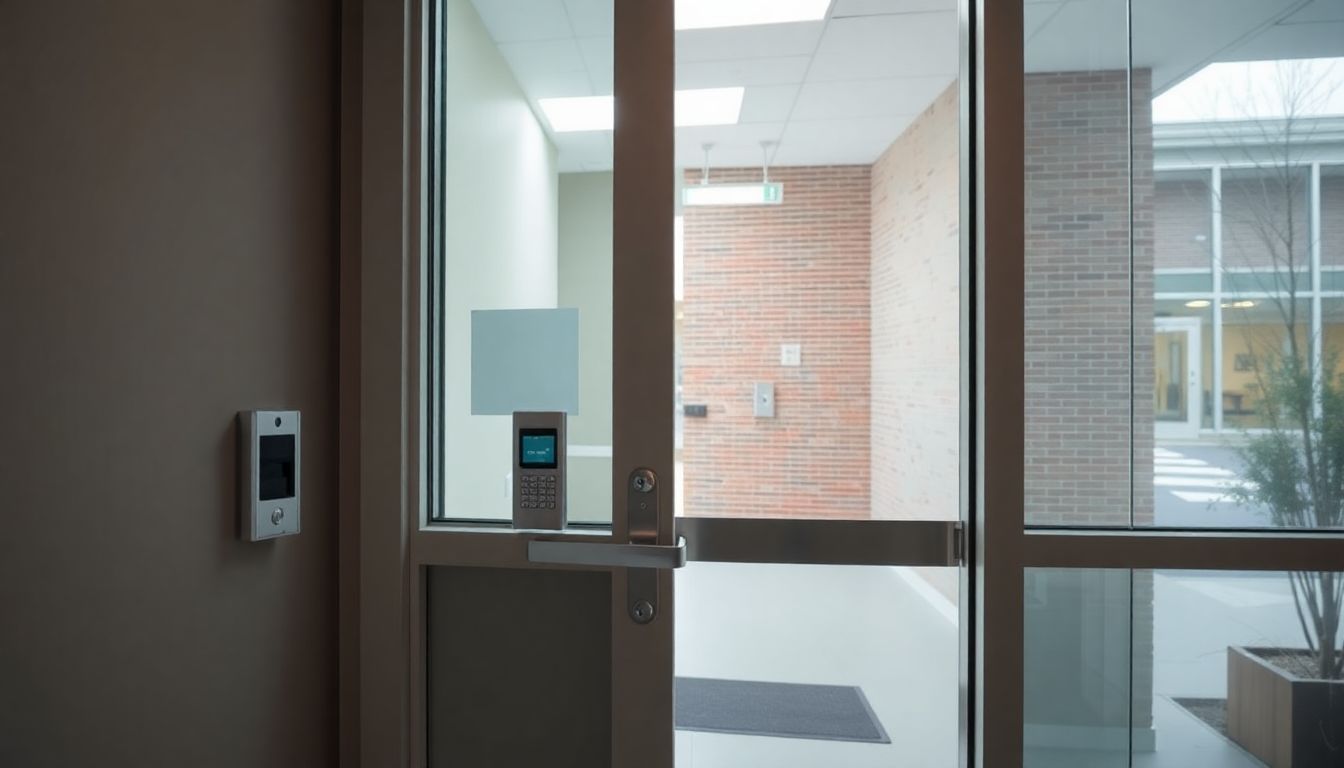
You are not a security manager. You are the one who gets called anyway.
Nobody hired a practice manager to think about door hardware. But when the back door is found unlocked on a Monday, when a handpiece is missing from operatory three, or when the alarm company rings at 4 AM, the call goes to the same person every time. The pages below are written for the three people who actually live with this.
Usually read by: Clinic owner / practice manager / office manager
The practice manager or office manager
- Your day
- You open or you close, you hold the codes, you let in the cleaners, the compressor technician and the courier, and you are the one who notices that the rear door has stopped latching properly. Somewhere in the same day you are also running the schedule and chasing a lab case.
- What you're judged on
- Being asked a question you cannot answer. Who was in the records area on Saturday, who still has a key from two hires ago, why the cabinet was open. You are accountable for the building without ever having been given the tools to account for it.
The dentist or physician who owns the practice
- Your day
- You are in an operatory or an exam room for most of the day and you find out about building problems between patients, in ninety-second gaps. Your name is on the lease, the licence and the equipment loan.
- What you're judged on
- Two things at once. The practical loss — a scanner, a handpiece set, a laptop — and the much worse conversation about patient information if anyone reached the records area or the server. You are also the one your college or your privacy lead will ask what safeguards were in place.
The front-desk or reception lead
- Your day
- You sit between the waiting room and everything else. You buzz people through, you take the pressure when someone is in pain and angry about the wait, and on some days you are alone at the desk while the last patient is still being seen at the back.
- What you're judged on
- Being alone with a situation that is escalating and having no discreet way to signal for help. Opening at seven in the morning in a dark plaza and closing at eight at night are the two moments staff actually raise with you.
The alarm trips at 3 AM on a Sunday. Who is driving there?
In most practices the honest answer is the owner or the practice manager, alone, in the dark, to walk through their own clinic and find out whether the wind moved a blind or somebody is inside. That drive is the part nobody accounts for when they price an alarm. A camera tied to the same zone changes the sequence: the event is looked at before anyone leaves home, and either it is nothing and everyone sleeps, or it is real and police are called with a description of what is on screen and which door was forced. That distinction also matters to the police service itself — across the GTA, verified activations are the ones that get a priority response, and the practice that can confirm what is happening is not competing with the unverified alarm two units down the plaza.
Same protocol whether the site is in Kitchener-Waterloo or anywhere else we cover.
The things people in your position actually ask us
“Does this make us compliant with PHIPA, or with what our college expects?”
We will not tell you that you are compliant, and you should be wary of a vendor who does. What your college, your privacy lead or your legal counsel expects of your practice is their determination, not ours, and it changes with the site and the year. What we do is build to the written requirement you hand us and produce the documentation that supports it — where readers and cameras sit, what each one covers, what is logged, and how long recordings are kept. If your privacy lead reads our design and wants something different, we change the design rather than argue about it.
“We are a small practice. Isn't a card system for hospitals?”
The size that matters is not the square footage, it is the number of people with a key and the number of interior doors that should not be open to all of them. A four-operatory practice with eight staff, a hygienist who works Saturdays, a cleaner with a key and two associates who rotate is exactly the case credentials were made for. If you are a single-operatory practice where the owner is the only person who ever opens the door, you should buy far less than this page describes — a good lock, a monitored alarm, a camera at the entrance and one covering the cabinet, and nothing else.
“Can you put cameras where they will not be looking at patients?”
That is the design constraint, not an afterthought. Coverage belongs on exterior approaches, the entrance, the reception counter, corridors, the rear door, and the outside of the room where drugs and records are held. It does not belong inside an operatory, an exam room, a consultation room, a washroom or a staff change area, and we will not design it there. We hand you the coverage map and the signage wording so your privacy lead can review the actual placements rather than a description of them.
“Our cleaners come in at night. We cannot give every contractor a fob.”
You should not. Credentials for outside contractors work best when they are time-bound and scoped — a cleaner's credential that opens the front entrance and the common corridor between eight and eleven at night and nothing else, and that stops working on the date the contract ends rather than the date somebody remembers to collect it. The contractor who needs the mechanical room once a quarter gets a credential issued for that afternoon. The point is not distrust; it is that the log answers the question later without anyone having to rely on memory.
“Staff will prop the back door open anyway.”
They will, if the design makes propping the sensible choice. Staff prop the rear door when they are carrying lab cases in from a car in the rain and the only credential reader is at the front. The fixes are ordinary: put a reader where people actually enter, make sure the closer and the strike work so the door latches without a shoulder, and put a contact on it so a door held open for eleven minutes is a known event rather than a discovery on Monday. An alarm that fires every single morning at the same door gets ignored, and then all of them do.
“We already have cameras from the previous owner. Can we just add to them?”
Often, and we would rather check than sell you a replacement. Before quoting we look at whether the recorder is still writing, what the real retention is as configured rather than as advertised, whether the cameras resolve a face at the entrance rather than a shape, and who actually holds the administrator password — which in a bought practice is frequently a company nobody has spoken to since the sale. If the cameras are serviceable and what you actually need is your own login and a working retention setting, we will say so and the job is small.
The risk is not one break-in. It is three different problems.
Overnight entry is the obvious one. A clinic in a plaza or a converted house is unoccupied for thirteen or fourteen hours a day, sits behind glass, and holds portable equipment that moves easily — intraoral scanners, handpiece sets, laptops, curing lights. Practices that keep controlled substances, prescription pads, or nitrous and sedation agents on site carry a second category of exposure entirely, because that inventory is a target in its own right and the loss has to be reported and accounted for rather than simply claimed.
The third problem happens in daylight, with the doors legitimately open. A clinic invites strangers in without screening them, which means the corridor to the records area, the server cupboard and the operatories is only as controlled as the door at the end of it. Most internal incidents we are called about are not dramatic — an unaccounted-for absence from the drug log, a laptop gone from an unlocked office, a dispute about who was in the building on a Sunday — and all of them are easier to resolve when the doors that matter record who opened them.
Clinics and dental offices in Kitchener-Waterloo carry the same shape of exposure found across Waterloo Region: publicly accessible through the working day, unoccupied for thirteen or fourteen hours after it, and holding drugs, portable equipment and patient records behind interior doors that often have no working lock. We design Kitchener-Waterloo clinic access control and cameras around that, and put the coverage limits in writing for your privacy lead.
Where practices usually discover the gap
It is rarely the front door. In walk-throughs the recurring findings are the same: a rear staff entrance with a worn strike that no longer latches, a records area and a server cupboard both standing open because the keys were lost years ago, a mechanical room the landlord's contractors enter without telling anyone, and a camera at the reception desk pointed so high it captures the top of everyone's head. None of that is negligence. It is what happens when a building is managed in ninety-second gaps between patients.
Where Clinic Risk Concentrates
Medical & Dental Clinic Security in Kitchener-Waterloo — what we actually see.
Kitchener-Waterloo clinics divide between the older stock and the new. Downtown Kitchener and Uptown Waterloo hold converted houses and small professional buildings where a dental or family practice occupies two floors behind residential-grade hardware. Around Grand River Hospital, along Fischer-Hallman, in Doon and out by the Conestoga corridor, newer plazas and medical buildings host multi-practitioner clinics with shared parking and rear service doors. The region's student population and the long stretch of the ION corridor mean downtown practices deal with more daytime foot traffic through the waiting room than a suburban plaza does, and reception staff here raise the aggressive-patient question more often than the break-in one. Waterloo Regional Police operate verified response, with audio, video, cross-zone activation or an eyewitness accepted as confirmation. For a clinic, that pushes the design toward cameras tied to alarm zones rather than a panel running on its own.
Older buildings, commercial traffic
A converted house in Uptown Waterloo or downtown Kitchener carries door hardware never intended for a clinic's volume. Strikes, closers and frames get addressed before credentials, because a reader on a door that does not latch proves nothing.
Downtown waiting rooms see more walk-in traffic
Practices along the ION corridor deal with more unscheduled foot traffic through reception. A discreet alert at the front desk and a controlled door between the waiting room and the treatment corridor are usually the first two things we specify.
Verified response in the region
Waterloo Regional Police accept audio, video, multiple-zone activation or an on-scene eyewitness as verification. Tying cameras to the alarm is what turns a clinic's activation into a confirmed report.
Police Coordination — Kitchener-Waterloo
We confirm the alarm permit and monitoring account details with Waterloo Regional Police for the clinic's address and set the account up for video verification, since the service operates verified response and accepts audio, video, cross-zone activation or an eyewitness on scene.
Client Story — Kitchener-Waterloo
Family practice, Uptown Waterloo — a house doing commercial work
A three-physician practice occupying a converted house, with a front door onto a busy street, a rear door onto a laneway, and a records area behind a door with an interior privacy latch and nothing else. Reception was single-staffed through the lunch hour. We replaced the rear door hardware so it latched, credentialled the records area, the drug cupboard and the rear entrance, added a controlled door between the waiting room and the treatment corridor, and put a discreet alert at the front desk. Cameras went on the front approach, the laneway and the corridor outside the records area — none in exam rooms. The practice's privacy lead reviewed and kept the coverage map on file. Staff stopped propping the rear door once the reader was moved to the side they actually carry things in through.
Access Control
A key tells you nothing.
A credential tells you who.
When a practice is asked who was in the records area on a given evening, a lock answers with a shrug and a list of everyone who has ever been issued a key, including two hygienists who left last year. A credential answers with a name, a door and a timestamp — and it can be switched off in ten seconds without changing a single cylinder.
A clinic secured without closing for it
Walk the clinic with the person who locks up
We walk the practice with whoever actually opens and closes, because they know which door sticks and which contractor lets themselves in. We map the entrance, the rear door, the drug and sedation storage, the records area, the server cupboard, the mechanical room and the staff parking approach, and we write down the coverage limits before anything is quoted.
Install around the schedule, not through it
Readers on the interior doors that matter, a monitored alarm with contacts and glass-break where the glazing invites it, and cameras on approaches, entrances, corridors and the outside of restricted rooms. Work is staged for evenings, weekends or a closed day, and any wiring through patient areas is finished and cleaned before the next morning's first appointment.
Hand over the log, the map and the login
The practice manager gets their own login — live view, search by door and date, export a clip, add or revoke a credential the same afternoon someone leaves. We hand over the coverage map, the signage wording and the retention setting in writing so your privacy lead has something concrete to review rather than a verbal description.
Built for a clinic's day, not a warehouse's
Credentialled Interior Doors
Card or fob access on the drug and sedation storage, the records area, the server cupboard and the private office. Access by role and by hour — administrative staff during business hours, associates on the days they work, cleaners on a scoped and time-bound credential that expires with the contract.
Audit Log the Manager Can Pull Themselves
Every opening recorded with credential, door and timestamp, searchable without a service call. When a question comes up about who was in the building on a Sunday, the answer takes a minute rather than a week of asking people what they remember.
Cameras Placed Around Patient Privacy
Coverage on exterior approaches, the entrance, reception, corridors, the rear door and the outside of restricted rooms — never inside operatories, exam rooms, consultation rooms, washrooms or change areas. You get the coverage map and the signage wording for your privacy lead to review.
Monitored Alarm with Video Verification
Contacts, motion and glass-break tied to camera views, so an activation is looked at before anybody is sent. Across the GTA it is the verified activation that gets a priority response, and it is also what keeps the practice off the wrong side of a false-alarm fee.
Entry Control and a Discreet Alert at Reception
Camera-intercom release on the rear or after-hours entrance so no one opens a door blind, and a silent alert at the front desk for the situation where a person in the waiting room is escalating and reception needs help without announcing it.
Documentation You Can Hand to Someone Else
A written coverage map, retention setting, door schedule and access policy, plus a timestamped clip and access extract after any incident. The point is that your privacy lead, your insurer or your college can be shown what exists — we produce the record, we do not interpret the obligation for you.
Client Results
What medical & dental clinic security clients say
“Two associates, a rotating hygiene team and a cleaning contractor all needed different access. We were managing it with keys and a sticky note. Now each person's credential opens only the doors they work behind, and it switches off the day they finish rather than whenever someone remembers.”
“Our front desk staff open at seven, often alone, in a plaza that is still dark. The camera at the rear entrance and the discreet alert at reception were the two things that actually changed how they feel about the shift. The break-in protection was the reason we called; that was the reason staff stopped asking to be scheduled in pairs.”
“A discrepancy in the drug log turned into a very uncomfortable week because we could not say who had been in that room. Riowell put a reader on the door and a camera on the approach. The next time a question came up we resolved it the same afternoon, and it was an honest recording error.”
“We had a break-in attempt at the rear door and realised the records room had never had a working lock. Riowell put readers on three interior doors and a monitored alarm across the clinic. The part I did not expect to value most is the log — I can answer who was in the building on a given evening in about a minute, and I stopped having to chase keys when someone leaves.”
Know which door,
and know who opened it.
Book a free clinic walk-through. We will map the entrance, the rear door, the drug and sedation storage, the records area and the staff parking approach — and put the coverage, the retention setting and the cost in writing so your privacy lead and your accountant can both read it.
Security for Clinics & Dental Offices beyond Kitchener-Waterloo
We cover Kitchener-Waterloo and 14 other Southern Ontario communities. Every location gets the same technicians, the same equipment, and the same response commitment — pick yours below.
Frequently Asked Questions
Ready to secure
your business?
Book a free on-site assessment. We'll evaluate your property and design a custom security and IT solution — no pressure, no commitment.